


James Shepherd-Barron
Latest posts by James Shepherd-Barron (see all)
- HOT FROGS and the monetization of money - 3rd March 2021
- CoVid Lessons Un-Learned - 29th January 2021
- HOLE IN THE WALL (Book Extract) - 18th January 2021
Regular payment of salaries and allowances to front-line health workers, and providing them with the means to convert digital transfers to cash is critical to controlling the Ebola outbreak in Eastern DRC. Governments, Aid Agencies and Cash Management Companies should do more to make this happen.
With over 2,000 people having died in the 12 months since Ebola reappeared in north-east DRC and a spiralling mortality rate, it is clear that the latest outbreak is far from under control. In response, announced a further £8 million of taxpayer’s money, taking the UK taxpayer’s total contribution for this outbreak alone to over £45 million. This is more than any other donor except the World Bank (to which DFID, as a government, also contributes).
The UK’s Department for International Development (DFID) receives a certain amount of negative comment in the media over what its detractors see as a poor return on investment on much of its overseas aid programming. Some of this criticism might be justified. But much of it is not. DFID’s work in the Democratic Republic of the Congo (DRC) on Ebola, for example, is a case study in how to learn lessons from previous mistakes, provide value-for-money for the UK taxpayer in the process, and effect sustainable change for the benefit of all. But there is more to do.
Since the debacle of 2014-2015 Ebola epidemic in West Africa, where the UN’s international health arm, the World Health Organisation, DFID and others failed so lamentably in the early stages of the response, DFID has played a central role in making sure that such failure does not recur. Not content with throwing short-term money at the problem, DFID did what it does best by thinking through the challenge posed by Ebola and other diseases of epidemic potential, advocating for evidence-based strategic transformation, and putting its money where its mouth was by bringing its humanitarian know-how and financial clout to bear.
First, it demanded fundamental reform of the health emergencies section in WHO. It worked in partnership with a number of different agencies to re-design its disaster management architecture, and ensured a new team was brought in to run it. It then committed long-term funding to this transformational change, linking phased payments to regular reviews of performance. This has fundamentally changed working practices within WHO, whose Ebola response efforts in and around DRC since the Equateur Province outbreak earlier in 2018 have improved dramatically. This model would doubtless benefit other UN agencies, such as Unicef, the World Food Programme and the Office for Coordination of Humanitarian Affairs.
Second, DFID convened a public-private partnership with the Wellcome Trust and a handful of major pharmaceutical companies to research and develop new vaccines, drugs and treatment protocols for Ebola. It’s early days, but the prognosis in terms of both prevention and treatment looks promising.
Third, having learned the lessons from the West Africa response, DFID worked quietly behind the scenes with UN agencies, Ministries of Health, and major non-governmental health partners to reinvent the way natural disasters and disease outbreaks are managed to better reflect non-medical aspects related to social anthropology and behaviour change.
This integrated and inclusive strategy has had a remarkable impact, especially on WHO, and the outbreak would be even more deadly and rampant than it is without this initiative.
But Ebola is a complex disease at the best of times and defeating this bug in the volatile, suspicious and conflict-riven Kivu districts of north-east DRC was never going to be easy. Vaccines and new treatment protocols help, of course, but these depend on having an acquiescent and knowledgeable population, efficient supply chains, coherent application by providers, and a functional infrastructure. Sadly, none of these things exist in the Congo.
Nevertheless, there are some aspects of the response jigsaw that are doable and deserve more attention.
One of the most important concerns the lack of trust between frontline health workers and the ministry that supports them. This covenant has been eroded over past decades by what the World Health Organisation calls a ‘perfect storm’ of environmental, political, social, and economic conditions which have seen the collapse of an already flimsy health infrastructure staffed by health workers that go unpaid for months at a time. Deep-rooted suspicions about corruption and political interference from a capital so far away it doesn’t even speak the same language have been fuelled by decades of under-investment and political neglect.
It’s not about the funding – the money exists – it’s about being paid. It’s about frontline health workers having access to cold hard cash today as much as it’s about long-term investment in health services for tomorrow. Rigorous cash management systems and a robust payments infrastructure are needed to make this happen. As David Malpass, President of the World Bank, pointed out recently, the absence of these things is not for lack of financing, but for “lack of basic financial systems to marshal resources effectively.” This is doubly frustrating at a time when the aid world is supposedly moving to a ‘cash and markets-based’ model of intervention in place of the traditional model based on in-kind donation.
People have to have trust in their health care system. “Public Health cannot work without the consent and support of the society it’s part of,” says Dr.Jeremy Farrar, an expert in tropical diseases at the Wellcome Trust, … and that includes the care-givers.
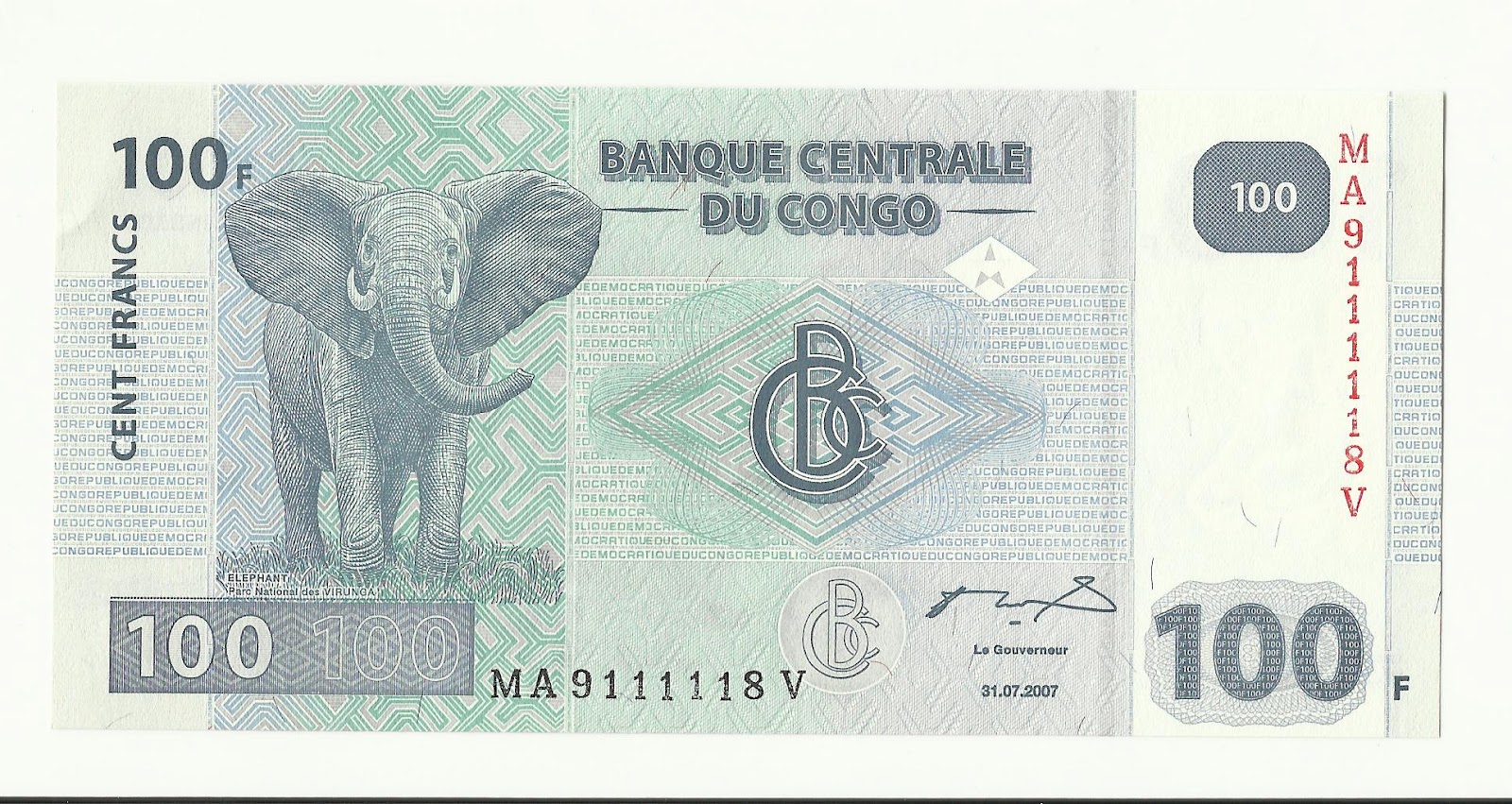
Although paid late, the system has improved somewhat since the earliest days of the response. Government health workers are now receiving their basic salaries. But other frontline workers such as laboratory technicians, vaccinators, safe burial teams and border screeners are not. Nor do they receive hazard pay supplements regularly. Not surprisingly, absenteeism is rife and, if they turn up for work at all, engagement can be lacklustre. To make matters worse, payments, when they come, take the form of digital transfers via mobile phones. This only works for regular staff already on the Ministry of Health payroll. Staff working in remote rural areas then have to travel for days at a time to convert these digits to cash. As everywhere else in the developing world, mobile money platforms need a reliable electronic payments infrastructure, and these rarely exist outside major urban centres. As a result, recipients have no option but to ‘cash out’ i.e go to an ATM or haggle with a banking agent. This is easier said than done when Equateur Province, scene of an earlier Ebola outbreak in the Summer of 2018 and an area the size of France, has one bank and one partially functional ATM.
Since Ebola is a not a disease that can be eradicated like Smallpox or Polio, and is therefore here to stay, getting agreed remuneration regularly to frontline health workers is critical to staff morale and therefore critical to the effectiveness of outbreak response measures. International health actors have to put as much effort into this aspect of the response as they do into developing new technologies such as vaccines, drug therapies, and state-of-the-art barrier care.
Those commercial companies who manage cash for society – the Prosegur’s, Loomis’s and G4S’s of this word – could play a more proactive role in working with donors, line ministries, financial institutions and telecoms companies to make sure frontline health get paid properly and have the option of being able to convert their salaries to cash if they so choose.
As the leading donor in DRC, DFID is well placed to catalyse this critical piece of the Ebola response effort and should put ‘cash management in crises’ higher up the agenda, not just for Ebola but for all diseases of epidemic potential. Failure to ensure that such an essential piece of the response jigsaw is in place will not only increase the likelihood that the disease will spread across international borders faster, but that it will spread further, perhaps even to a street near you.
To contact the author, e-mail: [email protected]