CoVid Lessons Un-Learned

What does the field of ‘international disaster management’ have to teach us about the United Kingdom’s response to the CoVid-19 pandemic?

The United Kingdom is currently experiencing the highest per capita mortality rate in the world from the CoVid-19 coronavirus. This could yet be reduced if some of the key lessons coming out of the field of ‘international disaster risk management’ were applied, including from the Ebola responses in Sierra Leone and the Democratic Republic of Congo between 2014 and 2018. In summary, the main ones are:

  1. Treat pandemics as full-on ‘natural’ disasters and reconfigure the decision-making architecture accordingly
  2. Evaluate performance regularly and transparently
  3. Engage the public via a credible spokesperson, leaving Ministers to explain political decisions
  4. Be consistent and coherent with risk communications
  5. Enhance tertiary and social care capacity
  6. Enhance diagnostic capacity, especially rapid diagnostic testing
  7. Localise the response through bottom-up engagement with communities and local authorities
  8. Incentivise self-isolation through financial compensation and job guarantees
  9. Provide cash transfers, not food
  10. Vaccine ‘wars’ over price and priority are inevitable. Manage expectations over vaccine development, efficacity and distribution
  11. Don’t rely on untested technology, especially mobile phone apps
  12. Ensure the mass media understands its social responsibility during a national emergency and re-roles accordingly. Establish a dedicated 24/7 YouTube channel (see Points 3 and 4)

Pandemics (or major cross-border epidemics) should be conceived of as ‘natural’ disasters rather than outbreaks of disease from the outset. This will ensure the change of mindset required by politicians, the public, and the health community to acknowledge that coordination should encompass multiple sectors and technical disciplines beyond those related solely to medicine and public health. Disasters are not inevitable; they are the result of decades of accumulated risk and deliberate decisions taken or not taken by society as a whole. In this, disasters are social constructs. In recognition of these factors, a reconfiguration of the decision-making architecture beyond everyday crisis management is required so that scientific evidence not only influences political decision-making but is seen to do so. Full engagement of all the sectors and disciplines involved will need the strategic oversight of an independent disaster risk management adviser. At no time was such a person involved in the UK response.

Hold regular real-time evaluations and periodically review performance. UN guidelines exist for this. In fact, in any major disaster response the British government would be the first to complain if the UN did not apply these guidelines. Measure performance against the counterfactual – the model of predicted outcomes that would probably occur if nothing were done – and use ‘net excess mortality all-cause’ and QALYs to justify the opportunity costs involved in health outcomes, not just mortality rates. Publish the dashboard so that everyone can see things like laboratory tests conducted, bed occupancy rates, vaccine deployment, therapeutic development, and ambulance usage in one place. To the extent possible, allow access to the underlying meta-data.

A credible spokesperson fosters trust in a way that a politician cannot. This would not normally be a chief medical officer as the response is not only medical. Nor would it normally be a chief scientific adviser as much of the evidence is anecdotal rather than ‘scientific’. The public need to know the limitations of ‘the science’ and ‘the science’ needs to inform – not lead – political decision-making. Attaching high, medium and low indicators of confidence to ‘facts’ which are actually opinions would help build public trust. Scientists rarely agree completely.  David Nabarro of WHO, Jeremey Farrar of the Welcome Foundation or Mukesh Kapilla of Manchester University, all of whom have real-world experience not just of outbreaks, but of disaster management, academia and science, would have the kind of profile needed.

Risk communications is not the same as ‘Strat-Comms’ (strategic communications) and needs to be STARCC (strategic, timely, actionable, relevant, consistent, and coherent). Messaging is more effective when coming from trusted sources, including celebrities. It’s about addressing rumours and the inconsistencies of human behaviour, not just the implacable rationality of epidemiological data. Every word matters. ‘Boosterish’ dissembling by politicians undermines public health messaging. The public were very quick to spot that vaccines “offered” mean something very different to vaccines “given,” for example. Technical issues like the sensitivity & specificity of rapid diagnostic tests should be explained in detail. It is only this level of knowledge that leads the public to understand how vaccination coverage, however high it is and however effective the vaccine, means that those vaccinated “do not become invincible overnight.” Don’t blame the public if messages like this have not been understood. Consider changing the school curriculum.

Signal that decision-makers understand the difference between the Hippocratic imperative of saving every individual life versus the public health imperative of saving populations. Wearing or not wearing of face-masks is more about this difference than it is about the type of mask or the opportunistic risk of putting them on and taking them off.

Over-centralisation should be avoided, especially as it means introducing inexperienced private-sector partnerships. This means that contact tracing and laboratory diagnostics should be conducted as close to affected communities as possible, preferably by government-led public health services whose capacities have been enhanced.

Pharmaceutical companies are not charities. They are in competition and will only invest in public goods if incentivised to do so, including guarantees that R&D costs will be underwritten by government in exchange for ‘no-profit’ distribution for a limited period. Because of this investment of public money, terms of commercial contracts should be in the public domain. They should not be expected to develop vaccines on a not-for-profit basis, although they should be expected to support equitable distribution. Overt and covert manipulation of research data should be expected. Usually, vaccine efficacity data from clinical trials is not emulated in the real-world and there can be considerable lags in production, which means that public and political expectations over when and how much immunity is conferred through mass immunization need to be managed.

Be wary of un-tested technology, especially when it involves mobile phone apps which, like cash transfers, are fragile at the best of times. Mobile phones, however, have a major role to play in coherent risk communications, especially when linked to location. The Red Cross are world leaders in this.

The media – all of it, not just public broadcast media – has a social responsibility during a pandemic response and needs to re-role accordingly. Absolute and Relative figures should always be used to avoid giving a false impression of what is going on. When the ‘science’ is open to interpretation, expectations need to be managed accordingly. TV and Radio hosts and their producers should take extra care to avoid creating false narratives through provocative framing of apparently innocent and binary questions and then holding politicians to account for “over-promising and under-delivering”. This is not accountability, this is sensationalism. And it can quickly confuse the public and erode trust in the wider effort. All so-called ‘facts’ promulgated via social and mass media should come with a ‘confidence indicator’ attached (as the IPCC does when reporting on climate change, for example). Consideration should be given to establishing a dedicated TV and Radio channel

End

James Shepherd-Barron is a practising international disaster risk management consultant who advised the British government on its Ebola responses in West Africa during the period 2014-2018. He is a Professor of International Disaster Management at Fordham University in New York and author of Absolute Disaster.


TORTOISE MEDIA COVID INQUIRY 2020) – An International Disaster Management Perspective

Tortoise Media held an ‘Inquiry’ into the UK government’s Covid response over three days between 19 November and 4 December. It made for fascinating listening. This was my submission:

I have managed to fold my observations – made with the benefit of over twenty-five years as a practicing disaster management consultant – into one overarching conclusion: The architecture, systems and capacities used by the UK government to manage large-scale emergencies and mitigate the risks of known hazards across the UK need to be urgently reconfigured.

To justify this conclusion, I offer four pieces of (anecdotal) evidence:

Exhibit A
On Day-1of your Inquiry, Professor David Alexander, a respected authority in the field of disaster risk reduction, opined that large-scale epidemics are a form of ‘natural disaster’ like any other and need to planned for and responded to as such. In my view, he was quite entitled to say this.

When in Sierra Leone as a humanitarian health adviser for The Department for International Development (DFID) at the beginning of the 2014 Ebola epidemic, I sent the following message:

“The Government of Sierra Leone is not alone in treating Ebola like any other cholera outbreak which it assumes can be contained by traditional measures of isolation, treatment, and community
outreach. As a result, they, the UN, and especially The World Health Organisation, are failing to see it for what it is: a full-scale natural disaster, every bit as deadly as the 2005 earthquake in Pakistan or Typhoon Haiyan in the Philippines. The epidemic is a slow-motion tsunami, the only difference being that the havoc being wrought is invisible and is taking place over months rather than minutes. All predictions point to it killing just as many people.”

The fact that diseases epidemics are registered as a separate category on the world’s EMDAT disaster database at the Centre for Research into the Epidemiology of Disasters (CRED) in Belgium is a deliberate omission by the international health community as it tends to reinforce the notion that disease is another of those aspects of life over which we have no control; is something apart; and something beyond our lay comprehension that only health professionals can deal with. After what happened in West Africa through 204-2015 and in the Democratic Republic of the Congo in 2018-2020, there can no longer be any excuse for this smug, medico-centric mindset not to take a more holistic approach by acknowledging what the professional disaster risk management community knew all along: That it’s not just the disease but fear of the disease which demands the full range of complementary professional disciplines from the fields of anthropology and psychology, politics and economics, risk communications and social mobilisation be taken as seriously as infection control, therapeutics and vaccination. By focusing on the epidemiology, HMG signally failed to do this coherently during the 2020 phase of the Covid pandemic.

Exhibit B
In the early phases of the West African Ebola crisis of 2014-2015, the Minister of Health in Sierra Leone just didn’t know what was required to mobilise resources at the sort of speed and scale used just months before for Typhoon Haiyan in the Philippines or for the Haiti Earthquake in 2010. Those who could have woken her up to the enormity of what was going on in the World Health Organisation (WHO) failed to do so. As a result, the management architecture was incorrectly configured and inappropriately resourced. This meant that those in charge were reacting to events, when they could and should have been getting ahead of the disease. The national ‘Emergency Operations Centre’ (EOC) established to manage the extensive control measures needed consisted of “little more than two flip-charts, one without paper, and a pile of ink-less pens strewn across a dusty table. There was nothing to show that this small room, crowded with empty chairs, was an ‘operations centre’ for anything, let alone an unfolding national calamity.”

I advised the government to galvanise an international response and immediately move the EOC out of WHO’s offices and into the Office of National Security, a building set up with generators, satellite relays, TV monitors and computer sockets during the Cholera response two years earlier and now lying unused. This they eventually did, but not before the international response arrived some three months later, by which time many people had died unnecessarily .

On Day-3, Lord O’Donnell, a Cabinet Secretary to three Prime Ministers over six years and therefore a civil servant well placed to comment, suggested that “Cabinet (COBRA) is not the appropriate decision-making body in times of crisis” and that the National Security Council (NSC) would have been – or would be – a more appropriate place from which to coordinate the response. This followed another observation from Professor Alexander on Day-1 that there was “not one emergency planner among the 56 members of the government’s Scientific Advisory Group for Emergencies (SAGE)”, a state of affairs later described by Mr. Nazir Afzal, a former prosecutor for the Crown Prosecution Service and lead ‘counsel’ during the Tortoise Inquiry, as “tantamount to a criminal act.” And, as was pointed out at the time, he should know.

I believe both witnesses were half right and half wrong. Neither SAGE nor NSC have in place the systems or structures to manage what is, after all, a public health emergency of international concern. SAGE is what it says it is, a technical (scientific) advisory body; the NSC also does what it says on the box and is designed for the most part to meet security risks emanating from terror and cyber threats. What is needed is a separate managing entity led by a team of professional disaster risk managers supported by planners, information managers, risk communicators and the whole range of technical competencies demanded when responding at scale, only one of which is epidemiology.

Exhibit C
After the ‘Kashmir’ earthquake of 2005, national response efforts in Pakistan were led by the military because there was no alternative disaster management authority to coordinate response and recovery efforts. As a result, they leaned heavily on the UN ‘cluster coordination’ system. By the time of the devastating floods of 2012 seven years later, not only had such an authority been established at national level based on what they had learned from the ‘cluster’ approach but they had built their risk management capacities to such an extent that significant technical (non-financial) support from the UN and other external actors was neither requested nor required. So often and so unfairly reviled, the UK’s Department for International Development (Now FCDO) did much to make this happen (as they have done in Nepal and elsewhere).

Exhibit D
During the Typhoon Haiyan response in the Philippines in 2013-2014, five ‘hub’ emergency operations centres (EOCs) were established across the affected region, with the main one operating out of the sports stadium in Tacloban, the worst-hit city, and strategic oversight maintained in the capital, Manila, over one-and-a-half flying hours away. The reason hubs and sub-hubs are established is because international disaster risk management professionals have learned two things the hard way: Coordination costs, but poor coordination costs lives; and, to be effective, you must be fast, you must be adaptable and you must be as close to the affected people as possible.

To put these Exhibits into context, the following observations might be helpful:

  1. The UK is a signatory to the Sendai Framework for Global Disaster Risk Reduction (2015-2030) which calls for increased investment in disaster preparedness and response by national governments, with Action Point 2 specifically calling for “strengthened disaster risk governance.” With the risk of hydro-meteorological hazards seeming to be increasing in frequency and intensity across the UK, there appears to be little political appetite to elevate serial ‘emergency’ responses – mostly led by ‘blue-light’ police and/or fire & rescue services into one coherent ‘disaster risk management’ response. This is less surprising once it is understood that politicians the world over prefer to respond to disasters rather then prevent them. Not only does it make them look good in the eyes of their voters but they know that preventive measures are not seen as cost-effective by a weary and wary public despite much evidence of up to seven-fold returns on investment.
  2. In your justification for holding this Covid Inquiry, you argued that the case for a public inquiry into the UK’s response to the Covid pandemic was clear and urgent: “The longer it is delayed,” you said, “the more scope those responsible will have to varnish the record, and the more inclined a weary public may be to let them. A full inquiry and a fearless reckoning are essential – to learn lessons, save lives and for the sake of justice – and yet it isn’t happening.” In all Level-3 (large-scale) international disaster responses, the UN system is obliged to hold a formal ‘Peer Review’ three months into a crisis (and every six months thereafter) supplemented by a series of more frequent sector-specific ‘Real Time Evaluations’ the purpose of which is not to apportion blame or even to hold people or organisations to account, but to act as a ‘mirror for management’ which leads to course corrections as needed to make the response and recovery effort more efficient and effective. HMG (DFID, now FCDO) is the first to complain if these aren’t done, yet, during the Covid crisis, they have been unwilling to hold themselves to the same level of transparency and accountability.
  3. Finally, the conclusion drawn here has not been made with the benefit of hindsight; I discussed these and many other risk factors in my blog through March and April 2020 (see https://www.aidessentials.org/category/disaster-management/). They also reflect my personal, direct experience.

What HMG should be considering, and considering fast, is the establishment of a Denmark-style National Disaster Management Agency based on existing Civil Contingencies legislation with full-time resources – including Civil Defence resources – dedicated to managing disaster risk as well as emergencies. The skills and capacities exist in the UK in the military, the blue-light services, the private sector and academia … though, notably, not in the civil service .

End

James Shepherd-Barron is an independent disaster risk management consultant and adjunct professor at Fordham University’s Institute of International Humanitarian Affairs with over twenty-five years of hands-on experience managing international disasters around the world on behalf of governments, the UN and international humanitarian organisations.

He can be contacted on ‘[email protected]

CALCULUS OF CALAMITY

This article is an extract from James Shepherd-Barron’s book ‘Calculus of Calamity’, adapted to reflect the emerging realities of nature’s most lethal natural hazard, a viral pandemic.

The Calculus of Calamity is a new stochastic optimisation model which provides a blueprint for re-framing the fundamentals of how disaster risks are measured, mapped and managed. It’s the algorithm that determines who dies, who doesn’t, and why in a crisis. It can be applied before or after a disaster and looks like this:

It is to disasters what Isaac Newton’s famous second law F = ma is to physics … albeit in slightly less elegant form. As with Newton’s equation it demonstrates the relationship between a series of different elements. In the case of so-called ‘natural’ disasters, over two thousand variables interact to determine what happens when a naturally occurring hazard event collides with human nature. In the Calculus of Calamity above, sixty of the most influential have been grouped into six areas of risk (more detail of which can be found in Annex A):

  • The type of hazard, including its probability and magnitude
  • Society’s tolerance for risk
  • The cost per avoidable net excess death or injury
  • The vulnerability of people and assets potentially exposed
  • Society’s resilience and ability to adapt
  • How well preparedness, response and recovery efforts are managed

In plain English, it simply describes what happens when vulnerable people with limited resilience are exposed to potentially lethal naturally occurring phenomena and how the potential consequences are managed. These phenomena range from being extremely violent sudden-onset events such as a hurricane, tsunami or earthquake to something less dramatic but no less lethal such as a drought or epidemic.

The word ‘calculus’ is used to describe the rational and irrational heuristic processes we humans use to deduce and manage risk in our lives, while ‘stochastic optimisation’ is just fancy management-speak for describing the ‘wicked’ process by which each variable (risk factor) interacts and changes over time.

Read more

EBOLA HAS MUCH TO TEACH US ABOUT THE MANAGEMENT OF COVID-19

The author is an independent disaster management consultant and was the UK Government’s Humanitarian Health Adviser in Kinshasa during the Ebola epidemics of 2018 in the Democratic Republic of Congo. He was also special adviser to the Minister of Health in Sierra Leone during the Cholera epidemic of 2012 and Ebola epidemic of 2014.

It’s never too late to learn from a virus, especially a new zoonotic RNA virus to which we are all susceptible. These are some of the relevant non-clinical lessons learned from the various Ebola (EVD) outbreaks of 2014 in Sierra Leone and the Democratic Republic of Congo (DRC) in 2018.

Before we start, though, just a few words to put things in perspective. It’s not over until it’s over. At the moment, there are no vaccines to prevent us contracting C-19 and no therapeutic drugs to cure us once we have. Until such time there is a vaccine, the population reaches herd immunity, or the bug mutates to become benign, we will eventually all contract the disease; it’s just a matter of when[2]. Since lockdown cannot be sustained forever, we should expect at least three waves of infection between now and the end of 2021. And, as I was once told by an exhausted Congolese doctor who had not been paid for six months, “You can recover from being broke; the only thing you can’t recover from is being dead.”

Read more

INFORMATION MANAGEMENT: The C-19 Dashboard

At his first daily press briefing on 30 March 2020, Dominic Raab, the UK Foreign Secretary, referred assembled journalists to the “latest update from our COBRA Coronavirus Dashboard.” He then spent much of the next 40 minutes providing imprecise answers to very precise questions. Much of what he said sounded like spin, not evidence-based decision making. Speaking from behind a podium emblazoned with what is in effect a political slogan rather than a public health message, perhaps the fact that listening to random government ministers speaking to ‘core press lines’ as if voicing over a Hovis bread commercial is the best we should expect.

But one mis-spoken word, one garbled sentiment in such panicky times gives a sense that our leaders are all at sea, floundering in a rip-tide of ad-libbed condescension. And in a frightened world certain only of uncertainty, this steadily but surely erodes trust in those who purport to protect us; a situation not helped by an over-zealous Police service quite demonstrably interpreting well-meaning government guidance with their own Orwellian brand of wooden-brained, judgmental heavy-handedness. A Police state and the wholesale infringement of civil liberties it implies in an era of ‘lockdowns’ and social isolationism is not where any of us want to be, or want to go.

A lot of this is down to wooly communications. OK, in the early stages of the C-19 response the government was trying to nudge us into changing our behaviour by politely suggesting we exercise outdoors only once a day. It became clear that the public had misinterpreted this nudge and had driven in their tens of thousands to walk in Derbyshire’s Peak District, it became clear that the type of dictatorial clarity introduced early on by the French was needed. In France, an ‘attestation’ was needed before leaving the home, one of the criteria permitting such action being ‘daily exercise in the vicinity of the home.’ This clarification was later added to the UK government’s advice.

But we British pride ourselves on our libertarian laissez-fair attitude and resent being told how to behave by the state. Knowing this, and well aware that indefinite lockdowns implode through the weight of their own boredom, tension and loneliness, the government has been careful to take a nuanced approach to the way mass behaviour change is invoked. This also makes good epidemiological sense as to go into lockdown too early – or too late, for that matter – risks causing more problems than it cures.

For a country to succumb in the way the UK meekly has to dictatorial diktat involves high levels of trust in organs of the state, particularly the Prime Minister’s Office. Squander this trust and public sentiment spirals downhill extremely rapidly. We learned this lesson time and again during the Ebola epidemics in Africa over the past decade.

Credibility in an era of social media and instant communications depends on factual information clearly, consistently and coherently explained. Where facts are hard to come by, then explanations of the assumptions behind the analysis will do. The public are not easily fooled. Any sense that science has been interfered with by politics or that unpalatable truths have been dumbed down or politically spun quickly undermines the nation’s trust in the capacity and capability of its leaders. In the final analysis, anything other than clear-eyed realism and total transparency results not just in a loss of credibility, but unnecessary loss of life. This is why Governor Cuomo is doing so well in New York.

As we gird ourselves for the acceleration of this epidemic to its late-April peak, trust in government is wavering. This is largely because, as Giles Whittell of Tortoise Media put it on 30 March 2020, “Governments are generally underperforming as purveyors of reliable information on the pandemic.”

What could they do better?

In Sierra Leone, three months after the Ebola outbreak was declared and one week after a national state of emergency was announced, the national ‘Ebola Operations Centre’ established to manage the extensive control measures needed consisted of little more than two flip-charts, one without paper, and a pile of pens strewn across a dusty table. There was nothing to show that this small room, crowded with empty chairs, was an ‘operations centre’ for anything, let alone an unfolding national calamity. There were no maps and no organigrams on the wall to show who was responsible for doing what, where, and when. There were no graphics charting the progress of the disease or of the measures underway to control it.

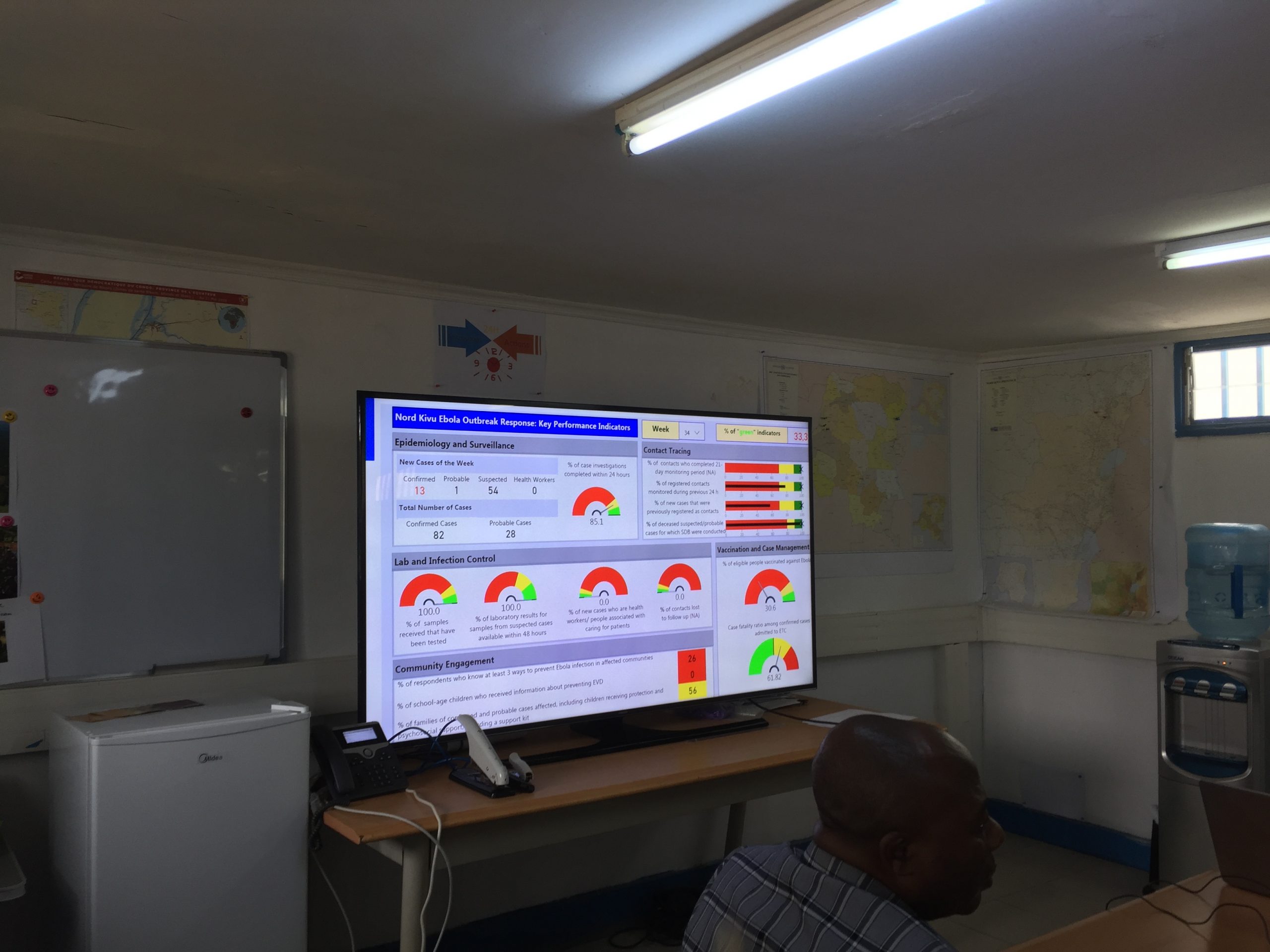
The World Health Organization has come a long way since then and by the time of the 2018 outbreaks in DRC had designed an operational template for enhanced coordination and control, including on how to report on what they call KPI’s or Key Performance Indicators. As with the COBRA C-19 Secretariat in London, the Emergency Operations Centre in Kinshasa would gather data from the affected area and from all over the world, compile it into 13 response areas (each with specialist ministry committees), interrogate the data, make their collective analysis, and report their findings to the Minister of Health at 2 pm every day. Rarely did anybody agree on anything. Heated discussions between doctors, epidemiologists, statisticians, logisticians and bureaucrats, both in the room and down the line from all over the world, would ebb and flow in this seething cauldron all morning, ending up as one coherent, easily readable dashboard in time to brief the minister who, one hour later, would brief the world.

Such a ‘management system’ exists. What it should look like is outlined in the ‘World Health Organization Framework for a Public Health Operations Centre’. Produced on the back of lessons learned from countless outbreaks around the world over decades, it has been designed by information managers who know how to present qualitative and quantitative data in easily understandable form. It does not need to be re-invented. It includes data on what UN disaster managers call “4W (who, what, where, and when) mapping” combined with health information management data on aspects such as hospital capacity, bed occupancy, laboratory diagnostics, case management, contact tracing, disease surveillance, supply chain management and human resourcing. Lots of numbers are then transformed into easy-to-understand graphics and supplemented with time-lapse maps to create a single gateway into what is going on in real time. The World Health Organization’s dashboard covers one entire wall of its Emergency Operations Centre in Geneva.

Tracking operational outcomes against KPIs, together with an explanation of what is being done to address shortcomings, is useful for both downstream operational planning and upstream accountability and is a standard operating procedure in international disaster responses, as is regular gap analysis. Reflecting operational performance against pre-determined criteria and benchmarks is critical, not just for strategic oversight and programme adjustment but for better integrating risk communication and community engagement into the overall response … a frequent shortcoming in outbreak responses up until now.

If the British government is using such a dashboard – and it is – then all it has to do is show it to the world, warts and all. When numbers are noisy and the data flaky, all the specialists and the politicians have to do is explain the assumptions behind why they have made the decisions they have. Every sentence is vital; every word critical. There is no room for mis-speaking in such a febrile atmosphere.

Providing such clarity in all its gory detail might confuse – or even upset – some of the public some of the time, but it would stop the media filling in the gaps with its own muddled and simplistic interpretation, much of it designed for effect rather than information. This is why, for example, we consistently hear about ‘how many people died yesterday’ rather than how many died as a percentage of the laboratory-confirmed caseload or whether the rate at which these deaths occurred is accelerating or decelerating, or is above or below that which was expected. Key statistics such as Case Fatality Ratios and explanations on why ‘mortality rates’ are different are not presented at all.

With a dashboard we could see the evidence for ourselves and draw our own conclusions. We could see when the government expects transmission or mortality to peak and when herd immunity might be achieved. From this panoply of graphs and graphics we can deduce our own patterns and work out for ourselves how to plan our lives in the new normal of limbo, lack of livelihood, and lockdown. We neither need nor want to be patronised. We just demand to be informed.

© James Shepherd-Barron

31 March 2020

COVID-19: Is the gain worth the pain?

Summary

If it works, the UK Government’s Covid-19 (C-19)[1] control strategy will cost over £300 billion and save half a million lives, most of them elderly. According to the International Monetary Fund, this level of expenditure will tip the country into recession and require levels of domestic borrowing not seen since the Second World War. Younger generations fear that it is they that will be left paying the price. Whether they deem this price worth paying depends on what value they are prepared to put on human life.

On the basis that each British citizen’s life is valued at somewhere between £5 – £9 million, that each life-year saved is consequently worth about £248,000 and that each victim loses an average of 14.6 life-years from C-19, this article argues that the price is worth paying. At least, for now.

“Yes, there is a high price to pay. But how do you put a price on life?”

(Michael Gove, UK Minister of State, 29 March 2020)

Over the longer-term, Britain’s youth might instead ponder the social and political, rather than economic, ‘price’ involved and prepare to drive a new agenda for change which re-engineers democracy, re-defines civil liberties, puts Climate Change front and centre, and ensures redistribution of wealth through enlightened corporate responsibility.

Whether the “world’s beauty will be revealed afresh” is in their hands.   

Introduction

The UK Government’s C-19 suppression strategy and its demands for extensive country-wide social isolation and ramping up of NHS critical care capacity may result in between 35,000 and 70,000 excess deaths[2] across the country by the end of December 2020 (University College London). This is in addition to the 30,000 that would die anyway from Acute Respiratory Infections such as seasonal Flu (Public Health England). Against the number of premature deaths predicted by ‘zero option’ (do nothing) modelling where up to 560,000 UK citizens would die (Imperial College) this represents the saving of around half a million lives.

However, this will come at great social and economic cost, leaving some to wonder whether such draconian disease control measures are worthwhile? Could the social and economic consequences of the virus be deadlier than the virus itself?

The answer, at least over the short term, appears to be ‘No’. The saving of 500,000 lives is deemed to be worth the billions of pounds committed by the UK Government. But how was that conclusion reached? And in what context does it hold good when the question has yet to be tested against society’s assumption that “every life is priceless” when, from a risk management perspective, they are not?

With the peak of transmission estimated to be in late May / early June, estimates of predicted mortality remain uncertain. But one aspect is crystal clear: The length of the epidemic and the numbers that die are, to a major degree, dependent of the public’s psychological resilience and their ability to break the chain of transmission through sustaining physical distancing from one another for at least three months, possibly longer.

Much clearer is that the strategy now underway will tip the global economy into recession. Most of this money will need to be borrowed now and repaid by future generations.

Are those future generations, some of whom are not yet born, willing to pay such a price, especially when most of those who die are elderly men with pre-existing chronic illnesses (co-morbidities) and who, according to some public sentiments, “only have a few years left anyway”? After all, as the Chief Economist of the UN’s World Food Programme recently put it, “There is only so long an economy can be locked down without inflicting lasting damage.”

The ‘damage’ he is referring to is not measured in short-term mortality alone – a few years from now this disease will be endemic and treated much the same as seasonal Flu or a common cold is – but the long-term consequences of global economic shut-down.

To answer this question, we need to know how much a life saved – or, more specifically, a life-year gained – is worth to society. Only later on, will we need to know what the potential social, economic and political benefits might be in terms of, say, climate change, democratic accountability, and corporate responsibility.

The Humanitarian Dilemma

Whatever control strategy is applied to the C-19 pandemic, two things are clear: A lot of people will die prematurely – many unnecessarily – and the social and economic cost will be enormous. Leaving aside the ethical considerations, society is faced with the same ‘humanitarian dilemma’ faced by disaster managers when coordinating responses to international calamities where resources are never enough, the data unreliable, and uncertainty the norm: Is the predicted gain in terms of avoidable deaths averted by any one intervention ‘worth it’ in terms of the financial cost involved? How does one balance the cost of the prevention against reducing the risk of a premature death that may never happen? If there are not enough resources to do both, is it more cost-effective to improve access to safe water in a cholera epidemic or vaccinate the children? Is it better to distribute the full value of cash grant required to keep a family in Northern Syria alive to half the families that need it, or half the amount to all the families?

The answer to ethical conundrums like these are not as difficult to work out as they appear, and, although away from public view, disaster managers make such life-and-death decisions all the time. So do insurance companies, government transport departments and NHS economists. Each uses a form of cost-benefit analysis (CBA) to help in their decision-making. And each involves the difficult moral question of how to value human life.

The Value of a Life

Although the concept of placing a monetary value on human life is controversial, the ability to do so is essential when making informed and rational decisions on resource allocations. Understandably, for ethical, religious or philosophical reasons, many people oppose valuation of something commonly perceived as priceless and argue that no monetary figure could possibly compensate entirely for the loss of a human life.

Nevertheless, comparing different options requires a common metric against which to measure impact. Usually, this is money. This immediately poses a challenge to planners as it requires a value be put on the direct effects on people vis-à-vis ill-health, injury and death. The UK’s Department of Transport uses a Value of Statistical Life (VSL). Disaster managers in the World Health Organization use Quality Adjusted Life Years (QALYs). Others use ‘Micromorts’ or ‘Judgement Values’ (J-values). Underpinning each approach are the triple concepts of life expectancy, earning potential and quality of life where a monetary value on future years of life is calculated based on discounted income (e.g GDP per head) and work-life balance (the ratio of time spent working to time not spent working). This is part of the Calculus of Calamity[3].

Although many would argue that the value they place on their life is infinite, reality reveals that this is not the case. There are limits to the amount we are prepared to pay for marginal increases in longevity – for example, to have expensive safety features fitted in our cars – and increases in occupational risk of death are often acceptable if the monetary compensation is substantial enough, as evidenced by the existence of ‘hazard pay’.

Another challenge is that most people have great difficulty in understanding the varying levels of risk to which they’re exposed. This is especially true when the impact is intangible and far off, as it is with a deadly pandemic like C-19. Yet another is that any attempt to put a figure on the value of human life has to take age and disability into account. Most people agree that it’s reasonable to suggest that the life of a new-born baby should carry a far higher value than that of someone in their eighties. Equally, people usually recognise that a double amputation might save the life of the patient but that this would mean additional years of life gained would be subject to a greatly reduced quality of life.

To accommodate such value judgements, health professionals and disaster managers use something called a ‘statistical life year’ (SLY) when making life and death decisions. Improved life expectancy in terms of ‘life years’ is a much better characterisation of the benefits to be gained by mitigating risk than ‘lives saved’. This is because, in fact, nobody’s life can ever be saved: the best that can be done is to return an individual’s life expectancy back to what it was before the hazard occurred. The SLY calculates the value to each individual of one additional year of healthy life gained by a particular intervention, adjusted for disability.

In the UK, where each citizen’s lifetime value to society is estimated to be worth between £5 – £9 million, the SLY value is estimated to be £248,209 (Thomas, 23 March 2020). This analysis is informed in part by a well-known economic effect called ‘The Preston Curve’ which demonstrates that we get to die earlier as we grow poorer[4] (Preston, 1975).

This implies that the government would be justified in spending about a quarter of a million pounds on any intervention that would extend a single citizen’s life expectancy by one year. With each victim losing 14.6 life-years on average and, in the best case, 500,000 lives being saved, the cost of control measures must be lower than £1.8 trillion … which, at the moment, they are[5].

C-19 as a Natural Hazard

Dividing the cost of the intervention by the aggregated number of life-years expected to be gained by the intervention allows disaster managers to calculate the relative risk of each intervention without having to bring unnecessary value judgements into the equation. Assessing cost-benefits in this way allows railway safety to be put on the same footing as medical treatments, natural hazard risk reduction and public health.

In this sense, our response to the C-19 pandemic is no different to our response to natural hazards such as Earthquakes or Tsunami; various response options, each with different risk parameters and expected outcomes, have different social, political and economic costs against which the short- and long-term implications on life expectancy and quality of life have to be considered.

All options have to be considered against the ‘Zero Option’, the ‘business as usual’ counterfactual of doing nothing. In the UK, modelling suggests this would lead to the C-19 epidemic peaking in late May/early June and being over by September 2020. But this would lead to roughly 550,000 lives being lost i.e a loss of life comparable to that suffered by the UK throughout the entire course of the Second World War.

Other options are equally unenviable. For example:

A 12-month lockdown during which fully equipped hospital capacity was prepared, followed by an additional four-month shutdown a few months later could cut fatalities by two thirds.

A 12-month lockdown during which a vaccine was developed and a large-scale immunisation programme was carried out would reduce fatalities to less than the average toll on people caused by seasonal influenza each year i.e about 13,000 premature deaths, being less than the average number of 17,000 influenza-related deaths in the UK per year (Public Health England, 2019).

Cost to Society

Meanwhile, the constraint which all but the ‘zero option’ have to consider is that C-19 countermeasures should not decrease GDP per head so much that the UK population as a whole loses more life-years than it gains from such measures. Public health protection schemes should not be put in place if their costs are large enough to cause the nation’s economic output to fall so significantly that it will cause more loss of life and if the scheme had never been implemented in the first place.

It is likely that a recession resulting in a general fall in economic output of 6.4% per person over a prolonged period would cost more life-years than would be restored by current and future C-19 countermeasures. This observation is based on comparisons from the economic recession of 2008-2009 where GDP per head fell by 6% and did not recover until 2015, and its negative impact on life expectancy. Under the scenarios mentioned above, modelling suggests that each victim suffers about 14.6 life-years (years of healthy life) lost.

Current macro-economic analysis suggests that planned countermeasures will severely dampen economic activity. Both the International Monetary Fund and the Centre for Economics and Business Research now predict that the pandemic will cause global GDP to decline twice as much as during the financial crisis of 2008. Furthermore, it raises the prospect of a 1930s-style recession. Such an outcome, if it were to come about, would cause a loss of life-years to the UK population that would far exceed the predicted toll under the ‘zero option’. It would be worse than doing nothing, in other words.

Thus HMG faces health and economic challenges of equal severity. It needs to institute reasonable countermeasures against C-19 but it needs, at the same time, to attempt to restrict the coming recession to not much worse than the 2008 financial crisis.

The Future

Whatever lies ahead, it is already becoming clear that the impact of C-19 will be deep and lasting; not just in the UK and Europe but in poorer and conflict-affected parts of the world which are woefully unprepared and lack the capacity to respond. Imperial College in London estimates that over 40 million people from such areas might die.

We can only hope that Alexander McCall-Smith was right when he said, “Our world, though diminished, will be much bigger, its beauty revealed afresh.”

© James Shepherd-Barron

30 March 2020

References

Thomas: J-Value assessment of how best to combat Covid-19; Unreviewed manuscript, 23 March 2020

Social Value UK: Valuation of a life, 9 June 2016

Ferguson et al: Impact of non-pharmaceutical interventions to reduce Covid-19 mortality and healthcare demand; Imperial College, 16 March 2020


[1] C-19 is the name given by WHO to the disease caused by the virus SARS-CoV-2

[2] Excess Deaths are those that occur over and above those that would occur anyway over the same period, based on previous data.

[3] Calculus of Calamity – A Stochastic Risk Optimisation Model for Managing Disasters; James Shepherd-Barron, KissyFish Books, 2019

[4] The Preston curve indicates that individuals born in richer countries, on average, can expect to live longer than those born in poor countries. However, the link between income and life expectancy flattens out. This means that at low levels of per capita income, further increases in income are associated with large gains in life expectancy, but at high levels of income, increased income has little associated change in life expectancy. In other words, if the relationship is interpreted as being causal, then there are diminishing returns to income in terms of life expectancy.

[5] UK Government control measures for the three months March-May 2020 inclusive are estimated at £320 billion

MOBILE PHONES & DISASTERS

This is an excerpt from the book, Absolute Disasters which can be found on Amazon.

Mobile technology increases accuracy and compresses time. Nowhere is this more effectively employed than before, during, and after a natural disaster. Targeted messages can be sent to specific groups of people warning of impending calamity, for example, and then, after the event, data can be collected in real time allowing humanitarian action to be targeted at specific disaster-affected communities more quickly and more accurately than ever before by knowing who has been affected and where.

Mobile phones can now help determine with reasonable accuracy how many people are affected (or infected) and where they are.

In Bangladesh, bulk messages are sent warning of the likely scale, location, and timing of floods, storm-surges, tropical cyclones, and tsunami, together with instructions about where to seek shelter. The latter part of the message is tailored to each locality. Syed Ashraf of the country’s Disaster Management Bureau says that, “being localised, it is also much more accurate and gives advice relevant to the area which makes people trust it more”. Follow-up messages are sent regularly advising on preparedness measures to take.

But it’s not just about verbal or text communications. When delivering humanitarian aid to disaster-stricken areas, there is often a severe lack of basic information on the locations of the people in need of help, including the number of people who have left the disaster area. This seriously hampers efforts to deliver the right amount of supplies to the right places, even when sufficient resources are available. Using data supplied by mobile phone operators, it is now possible to determine with reasonable accuracy how many people are affected and where they are, even in remote areas with limited coverage. This technology was used successfully in the Pakistan floods of 2011. 

Mobile phones can also be used to predict how many people have been killed, injured, or trapped in an earthquake. When referenced against previous movement patterns, lack of movement of individual mobile phones within a particular cell zone after an earthquake indicates how many people may have been in a particular building at the time. Absence of use and the rate of signal decay due to flat batteries provides a further indication of how many may be trapped and possibly still alive.

Mobile phone tracking can also be employed to reduce the chance of disease outbreaks. During the response to Haiti’s cholera outbreak in late 2010 and Sierra Leone’s in late 2012, it was possible to know which areas had received people from the affected zone, and therefore which areas were at potentially increased risk of a new outbreak[i]. This, in turn, allowed for health messaging over public broadcast radio services to be targeted at particular areas alerting both the incomers and indigenous populations to the heightened risk and what to do to prevent the outbreak from spreading. There is no technical reason that such messaging could not have been targeted to the individuals concerned, although data protection concerns currently preclude this. Mobile technology has also revolutionised the way communicable diseases are monitored after disasters. Already, mobile phones have detected spreading pneumonias in Sri Lanka, and escalating diarrhoeal diseases in Tamil Nadu within a day of the disaster occurring.

The most basic tool, text messaging, is used to communicate with specific disaster-affected populations. Geo-SMS identifies phones in a specific area and sends out messages from relief agencies asking if help is required to those phones only. A reply triggers a menu of options they can choose from, such as: “Do you need: 1) First Aid, 2) Medications, 3) Transport, 4) Food, 5) Water, 6) Shelter (press the corresponding number)”. This system is also used for sending early warning alerts. In the case of a tsunami, for example, it is pointless and potentially counter-productive to send such messages to mobile phone subscribers living on hillsides above low-lying zones where violent ingress of water could be expected. Yet, at the same time, it is important to alert those who may be involved in the aftermath, such as hospital staff.

Absence of timely and accurate data following a natural disaster is one of the greatest obstacles to overcoming public health challenges as people struggle to survive. Less than a decade ago, a woman in premature labour brought on by the stress of a disaster’s aftermath would have had few options to access life-saving treatment if an emergency health clinic had not been set up nearby. But today, mobile telephone technology can help her obtain medical advice over the phone, alert a community midwife to her plight, or even ask a volunteer to get her to the nearest hospital.

Also, the time taken to record health information can be slow when health workers have only paper and pencil to record where suspected cholera cases live, which children have been vaccinated, or where vital supplies have been sent. Paper is cumbersome; it has to be carried, kept dry, and it has to be photocopied. And then the data has to be re-entered manually on some computer somewhere. All of this is inefficient, and takes time. Software such as EpiSurveyor which was developed by the UN and the Vodafone Technology Partnership as an open-source platform, is typical of the sort of technology that can be used to control supplies and monitor areas where outbreaks are suspected, as it is “much cheaper, faster, of better quality, and easier to do than pencil and paper”.

And finally, there is mobile cash transfer. In October 2011, the UN’s World Food Programme started using mobile telephones to facilitate cash transfers to 54,000 of the most food insecure people living in the Ivory Coast who lost their livelihoods during the political crisis earlier in the year, and who lacked the resources to buy their food in the local markets.

For the potential of mobile telephony to be unlocked in the ways described here, the service providers have to be involved. For reasons of data protection, they are unusually discreet in how they apply the algorithms needed, and with which national and/or international authorities they coordinate. Care also has to be taken in how apparently valid information is moderated, as the humanitarian sector is as prone to manipulation and hacking as anyone else. Dilemmas over the unprecedented level of information sharing facilitated by this technology have led to debates over how the humanitarian sector can most effectively harness the full potential of this technology while retaining a principled approach to disaster preparedness, response, and recovery.


[i]              Bengtsson et al: Improved response to disasters and outbreaks by tracking population movements with mobile phone network data – a post-earthquake geospatial study in Haiti; 2011 (doi:10.1371/journal.pmed. 1001083).

Chairing Conference-Calls

Message from Faculty: “Please will all students engaging in on-line tutorials or meetings remember to attend wearing clothes.”

Chairing and taking part in conference-calls is quite different to other sorts of formal or informal meeting and is an art in itself. Because visual cues are usually absent, a different set of rules apply. This does not mean you may attend naked, but may mean, for example, interrupting speakers in a way that might be deemed offensive when in a ‘normal’ setting of being around a table. The Chair should not be afraid to mediate ‘robustly’, especially once it becomes clear that attention spans are very very short and that you are competing with e-mails and Facebook posts you cannot see. Just listen to any BBC Radio programme and you’ll quickly get to understand the dark art of strategic interruption.

Whether chairing or participating, the following tips for better conference-calls – and, for that matter, conducting BBC interviews – have proved useful in the past:


• Distribute important documents to participants well in advance, including a draft meeting agenda and overall statement outlining the purpose of the meeting. Do this via a platform like Googledocs.
• Set the time and date of the meeting making sure to make clear what time-zone is being used, and e-mail all attendees the passcode and conference access number in advance.
• Open up the meeting room five minutes early and jot down the name of participants as they come on-line.
• Start your meeting on time by reading out the list of those who have logged on, introduce yourself, and then ask if there is anyone else on-line who has not been mentioned.
• Clarify the purpose of the meeting and quickly run through the agenda to confirm that it suits everyone. Quite often, one or two participants will need to leave early and so will want various items brought forward. Having agreed any revisions, let everyone know how long the meeting is scheduled to take.
• Introduce late-comers at a logical break rather than as and when they enter.
• Participants should identify themselves by name and location each time before speaking.
• If disconnected, simply re-dial the conference access number and enter the passcode. There is no need for re-introduction.
• If any participant thinks a speaker is rambling on or repeating things already said, they should not be afraid to say so. Nobody will be offended.
• Enhance call quality and minimise background noise by muting your microphone when not speaking. Bandwidth limitations usually preclude using video. Put some ‘scotch’ tape over the camera just in case.
• If chairing, summarise action points and deadlines at the end of each agenda item rather than leaving it all to the end. Make sure everyone knows to whom the responsibility for each action has been delegated.
• Leave some time at the end of the meeting for any other business (AOB). However, note that some chairpersons prefer to suggest that AOB merely sets the agenda for the next meeting.
• Provide the web address where participants can see and exchange materials and request additional information.
• Close the meeting by deciding when the next one is to take place, and, if rotating the chair, who is to facilitate preparations and chair. It’s surprising how many times this is forgotten.
• After your meeting, circulate decisions and action items by e-mail to all attendees as well as other appropriate people.

CONTAGION

This is an excerpt from my book ABSOLUTE DISASTERS, published in 2017 at a time when we didn’t talk much about Coronaviruses. If you want to know more it is available on Amazon.

Anyone who saw Dustin Hoffman play a manic and obnoxious doctor from the US Centres for Disease Control (CDC) in the film Outbreak, or Kate Winslett in the more recent and realistic film Contagion will understand why there is reason to be alarmed about the threat posed by emerging infectious diseases. Emerging and re-emerging infectious diseases are those that are resistant to all known antibiotic therapies and/or for which the population has little or no immunity.

Influenza – the ‘Flu’ – will be the most likely cause of any future killer pandemic. And epidemiologists agree that it is not a question of ‘whether’ but ‘when’ such a killer will strike. We’re not talking about the kind of Flu that knocks us out for a few days every other winter, but a mutated strain against which we have no built-in immunity and for which there is neither cure nor vaccine.

That’s why Avian and Swine Flu caused such a commotion a couple of years ago, with the UN scaring the wits out of the world by suggesting that up to 150 million people could die. But statistical regression models clearly demonstrate that they were right then and they are right now. The threat has not receded.

Two recent outbreaks – the 2009 H1N1 Swine Flu and the H5N1 Bird Flu that emerged in Asia a few years earlier – failed to become the global killers predicted by the UN even though millions were infected. Bird flu was much the more virulent of the two, killing about half of those infected, and the fear is now that there will be a global resurgence that combines the virulence of the H5N1 with the transmissibility of the H1N1. The Spanish Flu of 1918 was one such “doomsday strain”, killing between 50 million and 100 million people; around 4%-7% of the world’s population at the time and many times more than were killed in the First World War.

It is easy to imagine the mass panic that would result if something similar to ‘Spanish Flu’ were to emerge again. Power-station workers, doctors, delivery drivers, water treatment engineers, and petrol station managers would either be sick or dead. Hospitals would close their doors. The lights would go out, the shops would be empty, and cities would grind to a halt. With people fleeing to remote rural areas, law and order would break down. This is the scenario so vividly – and, according to CDC in Atlanta, so accurately – portrayed in the film Contagion.

  Less than 2% of viruses that exist in the wild are known about.

According to the US Institute of Medicine, if the next major infectious disease is not from a previously unknown bug, the biggest threat comes from HIV-AIDs, Hepatitis-C, Tuberculosis (TB), and new, more lethal variants of Coronavirus, including Influenza. They also think that hospital acquired infections will also pose a growing threat as drug resistance increases and new strains of Streptococcus or Staphylococcus emerge. Already, there is only one antibiotic left that controls spread of the “super-bug” Staphylococcus aureus, and there are signs that even this is losing its effectiveness. TB, cholera, and malaria are not only beginning to make a comeback, but are doing so with more virulent and drug-resistant forms.

In reality, there are bugs out there which can kill up to 80% or more of all people they come into contact with, and for which there is no cure. Except for the most exotic – by which we normally mean ‘deadly’ – you will have heard of most of them: Influenza, AIDS, Ebola, and Bubonic Plague, for example. They may well ‘self-limit’ – i.e die out on their own accord – but not before millions are dead or dying.

But you are unlikely to have heard of Henipah, a particularly nasty form of virus found originally in fruit bats. Fruit bats have evolved with this virus over millions of years, and because of this co-evolution, they experience little more from it than the fruit bat equivalent of a cold. But once the virus breaks out of the bats and into a species that hasn’t evolved with it, a horror show can take place, as one did in rural Malaysia in 1999. It is probable that a bat dropped a piece of saliva-covered fruit into a forest piggery. The pigs became infected with the virus, and then amplified it. And then it jumped to humans. It was startling in its lethality. Out of 276 people infected, 106 died and many others suffered permanent and crippling neurological disorders. There is no cure or vaccine. Since then there have been twelve similar, though thankfully smaller, outbreaks in South Asia.

There are many more diseases with more familiar names such as Measles, Pertussis (Whooping Cough), Diptheria, Tuberculosis, Yellow Fever and others, which kill an awful lot of people around the world every year, but about which we hear little because we think that vaccination has incurred life-long immunity. Diptheria in particular is making a comeback in countries of the former Soviet Union where health infrastructure is crumbling and vaccination coverage is a shambles. In developed countries, the situation is not much better, with vaccination coverage rates one third of what they should be to ensure ‘herd’ immunity[1].

Politics and trade also play their part. Intellectual property rights are frequently flouted by manufacturers in developing countries who make generic copies of drugs that are under patent protection, not always with the permission of the patent-holder. Some of the drugs manufactured in this way contain no active ingredient, or contain half the prescribed dose … which is worse in many ways, as it fails to cure and stimulates resistance at the same time [see Disaster Misperception # 77].

Nearly two-thirds of emerging infectious diseases that affect humans originate in animals, with more than two-thirds of those originating in wild animals. The scope of the challenge this presents is huge and complex, not least because it is estimated that only one percent of viruses that exist in wildlife are known. And, with modern air travel and a robust market in wildlife trafficking, the potential for a serious outbreak in a large population centre is growing all the time. Increased ease of travel – one million humans are in the air at any one time – has radically altered the speed at which microbes can meet and recombine, and rendered us hideously susceptible to what results. Today, an aggressive transmissible influenza with an incubation period of a few days could be on every continent within 36 hours.

In other words, outbreaks of potentially deadly diseases reflect what we are doing, either deliberately or unwittingly, rather than just being things that happen. In this – and as the Ebola epidemic so vividly demonstrated – epidemics are no different to any other form of so-called ‘natural’ disaster.

We live in a world that, at least from the point of view of a virus or a bacterium, has changed very little. Our world remains fraught with the risk of new pandemics as microbes that have never encountered each other before combine to form mutant stains which will cause diseases capable of spreading in ways neither of their ‘parents’ could ever do.

The appearance of a virus capable of infecting 40% of the world’s population, and killing unimaginable numbers of them is not as far-fetched scenario as you might think. This is what Laurie Garrett said about Bird Flu (Avian Influenza) when it was making headline news in the years after 2005:

“The havoc such a disease could wreak is commonly compared to the devastation of the 1918-19 Spanish Flu, which killed over 50 million people in 18 months. But avian flu is much more dangerous. Doom may loom. But note the ‘may’. If the relentlessly evolving (H5N1) virus becomes capable of human-to-human transmission, develops powers of contagion typical of human influenzas, and maintains its extraordinary virulence, humanity could well face a pandemic unlike any ever witnessed.

Or nothing could happen at all.

Scientists cannot predict with any certainty what this virus will do. Evolution does not function on a knowable timetable, and influenza is one of the sloppiest, most mutation-prone pathogens in nature’s storehouse”.

Meanwhile, a horse dies mysteriously in Canada, a chimpanzee in Central Africa, a few pigs in Australia, and whole flocks of chickens in Indonesia. People in regular contact with these animals fall sick, and most die. These real-life cases, and others involving bats and unknown numbers of even more exotic species, represent not just isolated events, but a trend in the transmission of new diseases from animals to humans.

International health experts call such diseases ‘zoonotic’, meaning animal infections that somehow cross over to infect people. About one third of the 15,000 or so diseases known to man – including the modern day scourges of malaria, HIV, and more recently, Ebola – are in this category. For the most part, these diseases are the result of infection by one of three types of pathogen or bug: viruses, bacteria, and fungi. The most troublesome are viruses, mostly because of their abundance, their ability to adapt quickly, and the fact that they don’t respond to antibiotics. In the 1995 film Outbreak, a sweet little Capuchin monkey carrying a “deadly virus” that was going to cause “the greatest medical crisis in the world” caused anxiety in millions of cinema-goers. The film gave zoonotic infections the Hollywood treatment but stripped of the hyperbole, it contained elements of reality. Zoonoses are a major threat to human health, and it is considered “highly likely” that the next pandemic will originate from an animal, as Ebola did.

Within the viral camp, there are two main sub-groups, the DNA and RNA[2] viruses, with the RNA viruses being particularly worrisome. HIV-AIDS is caused by a zoonotic RNA virus. So was the Spanish Flu Laurie Garrett referred to above. And so are Ebola, Marburg, Lassa, West Nile, Dengue, Rabies, Yellow Fever, SARS, and all those other spooky names which strike the fear of God into anyone who has seen blood oozing from Kevin Spacey’s eyes after being infected by some unidentified bug in the movie Outbreak.

There are an awful lot of RNA viruses. They exist in the oceans, in rivers, in the soil, in forests, and in urban jungles. According to Professor Eddie Holmes of Penn State University, one of the world’s leading virologists, it’s possible that every species on the planet, bacterium, fungus, plant, and animal, supports at least one RNA virus, though, as he puts it, “we don’t know for sure because we’ve only just started looking.”

It is only fairly recently that marine biologists have come to realise that the open ocean is teeming with viruses of a surprisingly wide range of types. Not all of these viral particles are infectious, as ultra-violet radiation inactivates most of them in the photic zone. However, the energy surge that is a tsunami cascades water from great depths and unleashes it into a completely alien environment that includes oxygen and sunlight. In this environment, viruses not usually encountered collide with wounded or drowning humans to cause illnesses not usually seen[i].

We do know, however, that influenza viruses – which are RNA viruses – can be lethal and that there are three types, rather unimaginatively called A, B, and C. The A-type viruses cause the most severe epidemics in humans, and only this type is further classified into sub-types on the basis of the two main surface proteins, one called Hemagglutinin (H), the other, Neuraminidase (N). There are 16 known H sub-types, and 9 known N sub-types, which means that at least 144 combinations, or strains, are possible. So far, only three (H1N1, H1N2, and H3N2) are in general circulation among people. In the mid 1900’s, scientists from the Rockefeller Foundation and other institutions conceived the ambitious goal of eradicating some infectious diseases entirely. They tried hard with Yellow Fever, spending millions of dollars over many years, and failed. They tried hard with Malaria, and failed. They tried again with Smallpox, and succeeded. Why? The differences between these three diseases are many and complex, but probably the most crucial one is that Smallpox resided neither in a reservoir host, nor in a vector such as a mosquito or tick. Its ecology was simple. It existed in humans and humans only, and was therefore much easier to eradicate. The campaign to eradicate Polio, which is still ongoing, begun in 1998 by WHO, is a realistic effort for the same reason: Polio isn’t zoonotic. Eradicating a zoonotic disease, whether a directly transmitted one like Ebola, or an insect-vectored one such as Yellow Fever is much more complicated, because to exterminate the pathogen you either have to exterminate the species in which it resides or interrupt transmission in some other way.

End

James Shepherd-Barron is an independent Disaster Management Consultant and has an honorary doctorate in International Public Health & Epidemiology.

[1] Herd immunity describes when the vaccination of a significant portion of the population provides a measure of protection for individuals who have not developed immunity. The greater the proportion of individuals who are resistant, the smaller the probability that a susceptible individual comes into contact with an infectious individual.

[2] DNA stands for ‘deoxyribonucleic acid’, a self-replicating material which is present in nearly all living organisms as the main constituent of chromosomes. It is the carrier of genetic information. RNA stands for ‘ribonucleic acid’ and its principal role is to act as a messenger carrying instructions from DNA for controlling the synthesis of proteins.


[i]              Suttle et al: Do viruses control the oceans?; Natural History Magazine, Vol.108, 1999

One Hundred skills cluster coordinators should know before they die

THE CHALLENGE

Efforts to improve humanitarian performance through enhanced coordination are being compromised by a widespread misperception of what effective disaster management entails.

“Cluster coordination is a specific and challenging role for which even the most experienced programme manager will need to develop new skills.” (Global WASH Cluster, 2010)

Coordination is a management discipline for professional disaster managers. As with any other profession, the 137 skills involved have to be learned.

Read more