


James Shepherd-Barron
Latest posts by James Shepherd-Barron (see all)
- HOT FROGS and the monetization of money - 3rd March 2021
- CoVid Lessons Un-Learned - 29th January 2021
- HOLE IN THE WALL (Book Extract) - 18th January 2021
James Shepherd-Barron was Special Adviser to the Minister of Health in Sierra Leone in 2014 during the early phase of the West Africa Ebola crisis and DFID’s Humanitarian Health Adviser in the Democratic Republic of the Congo during the Ebola outbreaks of 2018. A former official in the World Health Organisation, he is an independent disaster management consultant.
SUMMARY
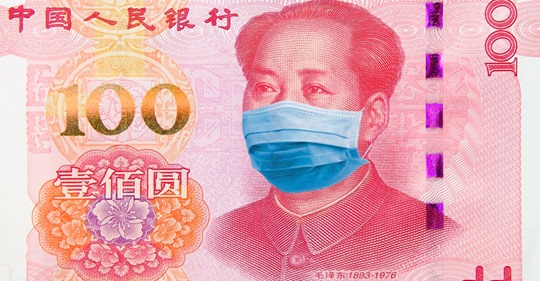
Disinfection of all banknotes in Hubei province by China’s central bank, the People’s Bank of China, as part of its Covid-19 outbreak response strategy demonstrates that physical currency plays a more important role in the control of outbreaks of communicable diseases than hitherto recognised by international health actors.
It is possible that contaminated banknotes present a public health risk for transmission of infectious diseases by acting as potential vectors, fomites and reservoirs for a wide range of bacteria and viruses, including Ebola Virus Disease (EVD) and the new Corona virus (Covid-19).
The extent to which banknotes may or may not play a direct role in ‘the chain of transmission’ is only part of the story. No less relevant is the belief among affected populations that they do. And this belief can have adverse secondary consequences when it comes to implementation of outbreak control measures.
International and national health authorities could take more robust measures to address the potential threat to public health posed by banknotes in ongoing outbreaks and should work with the cash industry – specifically, members of the International Currency Association – to ensure that the disinfection and eventual replacement of banknotes with disease-resistant alternatives becomes an integrated part of any control strategy for diseases of epidemic potential.
BACKGROUND
In June 2014, just as the West Africa Ebola epidemic was gathering momentum, Kenema hospital in Sierra Leone was attacked by an angry mob armed with machetes bent on destroying the Ebola Treatment Facility and killing its patients and staff, particularly its international staff[1]. After a two-hour running battle, the attack was only just thwarted by the local police, thereby saving the lives of many, including the author.
But what had roused the mob to such excess in the first place? Partly, and as always with Ebola, a particularly nasty and deadly disease whose chain of transmission is not widely understood in Central and West Africa, the motivation was fear. The townspeople did not want suspected Ebola cases imported into their town; a disproportionate number of local health staff working at the facility had already died, and the fear was palpable.
Another reason was that the residents of Kenema had known for some years the hospital housed an internationally funded haemorrhagic fevers research laboratory[2] which, over time, had led to local suspicions that biological agents were being developed there.
Thirdly, and perhaps the biggest motivation of all, rumours had circulated wildly in the market to the effect that the local currency had somehow become infected – perhaps deliberately – with the virus, resulting in a massive disruption to normal trading activity. Within hours stallholders, taxi drivers and guest-house owners simply refused to handle any form of money, even when wearing rubber gloves, and a barter economy took over. Within days, market stalls shut up shop across Sierra Leone and it was many months before normal economic activity resumed[3].
Four years later, in 2018, first in Equateur and then in North Kivu Provinces of the Democratic Republic of The Congo (DRC), much the same thing happened. First it became difficult to buy goods in local markets with physical currency and then Ebola Treatment Centres and national and international health staff began to be attacked.
In all three outbreaks, social mobilisation programmes tailored to local anthropological and demographic conditions had been quickly instituted as a key component of the outbreak control strategy. Despite heroic efforts by the governments concerned, the World Health Organisation, NGOs and others to correct erroneous information, rumours that cash was playing a role in transmission of EVD would not go away. Not only did this have the immediate consequence of disrupting local economic activity, but it fostered a climate of suspicion which in turn led to the outbreaks being extended in both time and space. The consequence in all three cases was that people died unnecessarily. Clearly, public-health messaging wasn’t working.
So, what more could be done when it comes to the role of physical currency in communicable disease outbreaks in general, and EVD and Covid-19 outbreaks in particular?
DISCUSSION
Social Mobilisation
In terms of their potential to act as vectors, fomites or reservoirs of harmful microbiological pathogens it is theoretically possible for physical currency to play at least an indirect role in disease transmission (Kumar, 2009)[i]. But in practice there is no evidence that anyone has ever died after handling a contaminated banknote. As the stories above make clear, however, the epidemiological evidence is one thing; human belief and behaviour is quite another.
Through the first year[4] of the Kivu response in DRC, many local people living in affected areas expressed the belief that Ebola did not exist; had supernatural origins (e.g. witchcraft); was created by politicians in order to influence elections; or was introduced by foreign non-governmental organisations in order to make money (Baggio, 2019)[ii].
In a survey of knowledge, attitudes and practices about transmission routes for EVD conducted in Senegal in 2017, nearly half (47%) of respondents thought that banknotes were one of the main modes of transmission (Lakhe, 2018)[iii]. It is no surprise to see that rumours of banknotes that have been deliberately infected with deadly diseases can lead to politically motivated outbreaks of violence perpetrated by ill-informed or superstitious people on national health workers and foreign aid staff. The impact can be particularly severe in the case of EVD. But even with less virulent diseases such as Covid-19, “fear can be as deadly as the illness itself.”[iv]
The question of whether or not banknotes can act as vectors or fomites of disease is contentious and, over the years, has given rise to the perpetuation of many myths. These myths have arisen in large part because of the low priority given to any statement to the contrary. In part, this is down to the contradictory nature of the little evidence available[5] and poor analysis has been exacerbated by simplistic and ill-informed reporting in the media. A local newspaper in Nigeria, for example, published an article during their Ebola outbreak of 2014 that artfully blended fear, myth and poor health messaging entitled ‘Fears that Ebola Virus Disease (EVD) could be transmitted by exchange of paper currencies may not be completely wrong …!” (Vanguard News)[v]
Persistence
As with much so-called ‘evidence’ it is possible to find contrasting views in academic literature. In a 2014 travel advisory, the European Commission’s Health Committee quoted WHO guidance at the time to the effect that “You cannot contract Ebola by handling money.”[6] Yet a 2016 study to assess the potential contribution of fomites to EVD infection in humans demonstrated that EVD remains infectious for 6.2 days under air-conditioned hospital conditions and for 2.5 days under environmental conditions on blood-spotted banknotes indicating that “EVD-contaminated items such as syringes and banknotes may pose a serious risk to humans” (Westhoff Smith, 2016)[vi]. The peer-reviewed article does not, however, mention how unlikely it is that a banknote can become contaminated with the blood or secretions of a bed-bound Ebola patient shedding the virus.
The extent to which hand-to-note and note-to-hand transmission occurs is determined not just by the environment but by the type and persistence of the pathogen involved. The main factors affecting survivability of pathogens on the surface of paper money is the presence of organic matter, solar radiation, temperature and humidity (Taylor, 2007)[vii].
Shigella, various Mycobacteria and Clostridium difficile can survive for months on a banknote’s surface, while Corona viruses, Severe Acute Respiratory Syndrome (SARS) viruses, Rhinoviruses, and Cholera vibrio persist only for a few days (Kramer, 2006)[viii]. One study that looked at the ability of influenza viruses to infect a cell culture after varying amounts of time on a banknote showed survival times from 48 hours to 17 days, depending on the environment and how they were deposited on the banknote (Thomas, 2008)[ix]. There is no information in the papers reviewed for this article on the persistence of EVD on physical currency.
Paper currency is not made of paper, but a mix of cotton and linen. It is multi-layered and absorbent and therefore allows for bacteria and viruses to reside within the substrate as well as on the surface of both sides (El-Dars, 2005)[x]. This makes it a potential reservoir, not just a fomite (Kumar, 2009).
The longer paper currency remains in circulation, the more opportunity there is for it to become contaminated. Lower-denomination notes, being the most often handled in developing countires, are the most contaminated[xi]. It must be assumed that the more engrained the organic matter – dirt, sweat, and dead skin – the greater the likelihood of a given pathogen persisting (though there is currently no official evidence for this). Low denomination banknotes in West Africa have usually been in circulation for so long that they have become dirty to the point they are scarcely recognisable.
Levels of contamination on paper currency varies widely between countries (Varusha, 2017)[xii] and polymer notes are significantly less contaminated than cotton/linen-based notes (Vriesekoop, 2010)[xiii].
Public Health Messaging
In the case of DRC’s two Ebola outbreaks, World Health Organisation staff in the field at the time[7] argued that such knowledge was less relevant than it might be in other epidemic situations owing to the fact that the life-cycle of EVD makes it unlikely that cash (paper money) would be passing hands during the phase of peak transmission. This is when the patient was either dead or close to death and, if at home, surrounded by family members. It should also be noted that cash and voucher distributions[8] were not encouraged in the affected areas as it was assumed that this would stimulate mingling of potentially infected people in marketplaces – a situation best avoided – and undermine efforts at establishing the vital 21-day period of self-isolation.
WHO also argued that addressing the issue of paper currency being a potential vector for disease transmission in public health messaging could be counter-productive as it would only serve to dilute the simplest and most effective message of all – that of the need for regular hand-washing with soap and (chlorinated) water, particularly before and after handling of food[9].
Food Security
Ebola outbreaks in Africa have had an extremely negative impact on what is often an already fragile food security situation. Reduced farming activities as well as disruption of trade following travel restrictions and market closures have resulted in food shortages and high food prices in Ebola-affected countries and beyond (OECD, 2014)[xiv].
New Technologies in Banknote Production
According to specialised banknote printers and ink manufacturers it is feasible to include anti-microbial agents in the banknote substrate, ink, or varnish. There is even an urban myth that this is indeed what the Swiss authorities intend to do in the event of a pandemic. However, they also feel such technologies would be unnecessary as these varnishes can include surfactants which make it difficult for any contaminant, including oil, water, organic materials and pathogens to remain on the surface for long[10]. As far as pathogens are concerned, this claim has not been verified by primary research.
Precedent
There is precedent for the introduction of new banknotes in humanitarian settings. In Libya, for example, in 2011, the British government introduced a new paper currency (printed by De La Rue) following the overthrow of Col. Gaddafi.
There is also precedent for disinfection of existing banknotes. As part of its Corvid-19 outbreak response strategy in February 2020, the People’s Bank of China, disinfected all banknotes in Hubei province which had potentially been in contact with the new virus. The process involved the use of ultraviolet light, high temperatures and then sealing and storing the notes for 7-14 days.
Cost
The cost of banknote production is not as high as it might at first appear as it can be offset by seigniorage[11] and be integrated into a country’s normal cash handling and withdrawal cycle.
CONCLUSION
As passive fomites, it is likely that banknotes present no greater risk of disease transmission than other forms such as doorknobs, credit cards and mobile phones. However, as potential reservoirs, contaminated banknotes allow pathogens to persist for longer, thereby presenting a potentially greater public health risk than doorknobs. This implies that outbreak control efforts must more directly address these risks – either real or perceived – by more than targeted public-health messaging and increased prevention and treatment protocols such as provision of hand-washing facilities and development of vaccines.
New technologies allow for more robust disease-resistant measures to be included at the time of banknote production. Application of such technologies will have direct and indirect effects: the replacement of old banknotes for new will signal that the authorities are taking their citizen’s concerns seriously while also reducing the actual risk of disease transmission.
It is likely that secondary effects in terms of attacks against health facilities and health workers and reductions in food security and nutritional status due to market disruption will also be reduced by their introduction. However, more research is needed to ascertain the survivability and persistence of pathogens such as EVD and Covid-19 when these new banknote printing technologies are used.
Given these factors, four actions are recommended:
- Conduct primary research into the persistence of EVD, Covid-19 and Cholera on polymer and non-polymer banknotes manufactured with repellant varnishes in a range of environmental conditions.
- Recognise that physical currency is perceived by local affected populations as having a major role in the chain of transmission.
- Take earlier and more robust steps to convince affected populations that the risks of contracting communicable diseases from the handling of banknotes, while negligible, are real enough to warrant visible action.
- Take the earliest possible steps to replace existing currency with new banknotes (either polymer or manufactured with oil and water-repellent varnishes and/or anti-microbial agents).
End
Approx 2,800 words
To contact the author, e-mail: [email protected]
[1] On the day of the attack, there were over 20 suspected or confirmed EVD cases in the treatment facility, one Belgian laboratory technician, one epidemiologist from Public Health England, and one visitor from DFID (the author).
[2] Funded by DFID, ECHO and USAID via partners including Tulane University and the British NGO, MERLIN (now part of Save the Children, UK)
[3] Market disruption was exacerbated by later imposition of quarantine restrictions by the Government
[4] The outbreak probably began months before it was formally recognised in June 2018
[5] An online search of PubMed only showed 20 references to ‘paper currency and disease transmission’
[6]https://ec.europa.eu/health/sites/health/files/preparedness_response/docs/ebola_infotravellers2014_en.pdf
[7] Conversation between the author and WHO Chief of Emergency Operations Section, June 2018
[8] Cash and Voucher Assistance Programmes are nowadays the default relief modality over in-kind distributions around the world, and had been ongoing in the Kivu provinces for some time before the Ebola outbreak.
[9] Conversation between the author and WHO Ebola Coordinator in DRC, June 2018
[10] Conversation between the author and staff of SICPA in Lausanne, March 2019
[11] Profit made by a government by issuing currency, being the
difference between the face value and the cost of production
REFERENCES
[i] Kumar et al: Detection of Virulence Genes in Staphylococcus aureus Isolated from Paper Currency; International Journal of Infectious Diseases, Vol.13 (6) 2009
[ii] Baggio et al: Bringing community perspectives to decision-making in the Ebola response in the Democratic Republic of Congo; Humanitarian Practice Network, February 2019
[iii] Lakhe et al: Knowledge, Attitudes and Practices towards Ebola Virus Disease among Participants in an Ebola Vaccine Trial in Dakar, Senegal; Journal of Tropical Diseases & Public Health. Vol. 6 (4) August 2018 [https://www.omicsonline.org/open-access/knowledge-attitudes-and-practices-towards-ebola-virus-disease-among-participants-in-an-ebola-vaccine-trial-in-dakar-senegal-2329-891X-1000276-104368.html accessed 28 April 2019]
[iv] Hatfield: US Navy, 2 March 2020
[v] Vanguard Newspaper, September 2014
[vi] Westhoff Smith et al: Ebola Virus Stability Under Hospital and Environmental Conditions; The Journal of Infectious Diseases, Vol. 214 (3) 15 October 2016 [https://academic.oup.com/jid/article/214/suppl_3/S142/2388079 accessed 28 April 2019]
[vii] Taylor et al: The Persistence of Flood-borne Pathogens on building surfaces; International Journal of Hygiene and Environmental Health, Vol.216 (1) 2007
[viii] Kramer, Schwebke and Kampf: How long do nosocomial pathogens persist on inanimate surfaces? A systematic review; British Medical Council Journal of Infectious Diseases, Vol.6 (130) 2006
[ix] Thomas et al: Survival of Influenza Virus on Banknotes; Journal of Applied and Environmental Microbiology, Vol. 74 (10) 2008
[x] El-Dars and Hassan: A preliminary bacterial study of Egyptian paper money; International Journal of Environmental Health Research, Vol.15 (3) 2005
[xi] ibid
[xii] Varusha and Gowri: Paper Money and Coins as Potential Vectors in Transmissable Diseases – A Review; Journal of Pharmaceutical Sciences and Research, Vol.9 (2) 2017
[xiii] Vriesekoop et al: Dirty Money- an investigation into the hygiene status of some of the world’s currencies as obtained from food outlets; Journal of Foodborne Pathological Disease, Vol.7 (12) 2010
[xiv] http://www.oecd.org/swac/ebola-10facts.htm