CoVid Lessons Un-Learned

What does the field of ‘international disaster management’ have to teach us about the United Kingdom’s response to the CoVid-19 pandemic?

The United Kingdom is currently experiencing the highest per capita mortality rate in the world from the CoVid-19 coronavirus. This could yet be reduced if some of the key lessons coming out of the field of ‘international disaster risk management’ were applied, including from the Ebola responses in Sierra Leone and the Democratic Republic of Congo between 2014 and 2018. In summary, the main ones are:

  1. Treat pandemics as full-on ‘natural’ disasters and reconfigure the decision-making architecture accordingly
  2. Evaluate performance regularly and transparently
  3. Engage the public via a credible spokesperson, leaving Ministers to explain political decisions
  4. Be consistent and coherent with risk communications
  5. Enhance tertiary and social care capacity
  6. Enhance diagnostic capacity, especially rapid diagnostic testing
  7. Localise the response through bottom-up engagement with communities and local authorities
  8. Incentivise self-isolation through financial compensation and job guarantees
  9. Provide cash transfers, not food
  10. Vaccine ‘wars’ over price and priority are inevitable. Manage expectations over vaccine development, efficacity and distribution
  11. Don’t rely on untested technology, especially mobile phone apps
  12. Ensure the mass media understands its social responsibility during a national emergency and re-roles accordingly. Establish a dedicated 24/7 YouTube channel (see Points 3 and 4)

Pandemics (or major cross-border epidemics) should be conceived of as ‘natural’ disasters rather than outbreaks of disease from the outset. This will ensure the change of mindset required by politicians, the public, and the health community to acknowledge that coordination should encompass multiple sectors and technical disciplines beyond those related solely to medicine and public health. Disasters are not inevitable; they are the result of decades of accumulated risk and deliberate decisions taken or not taken by society as a whole. In this, disasters are social constructs. In recognition of these factors, a reconfiguration of the decision-making architecture beyond everyday crisis management is required so that scientific evidence not only influences political decision-making but is seen to do so. Full engagement of all the sectors and disciplines involved will need the strategic oversight of an independent disaster risk management adviser. At no time was such a person involved in the UK response.

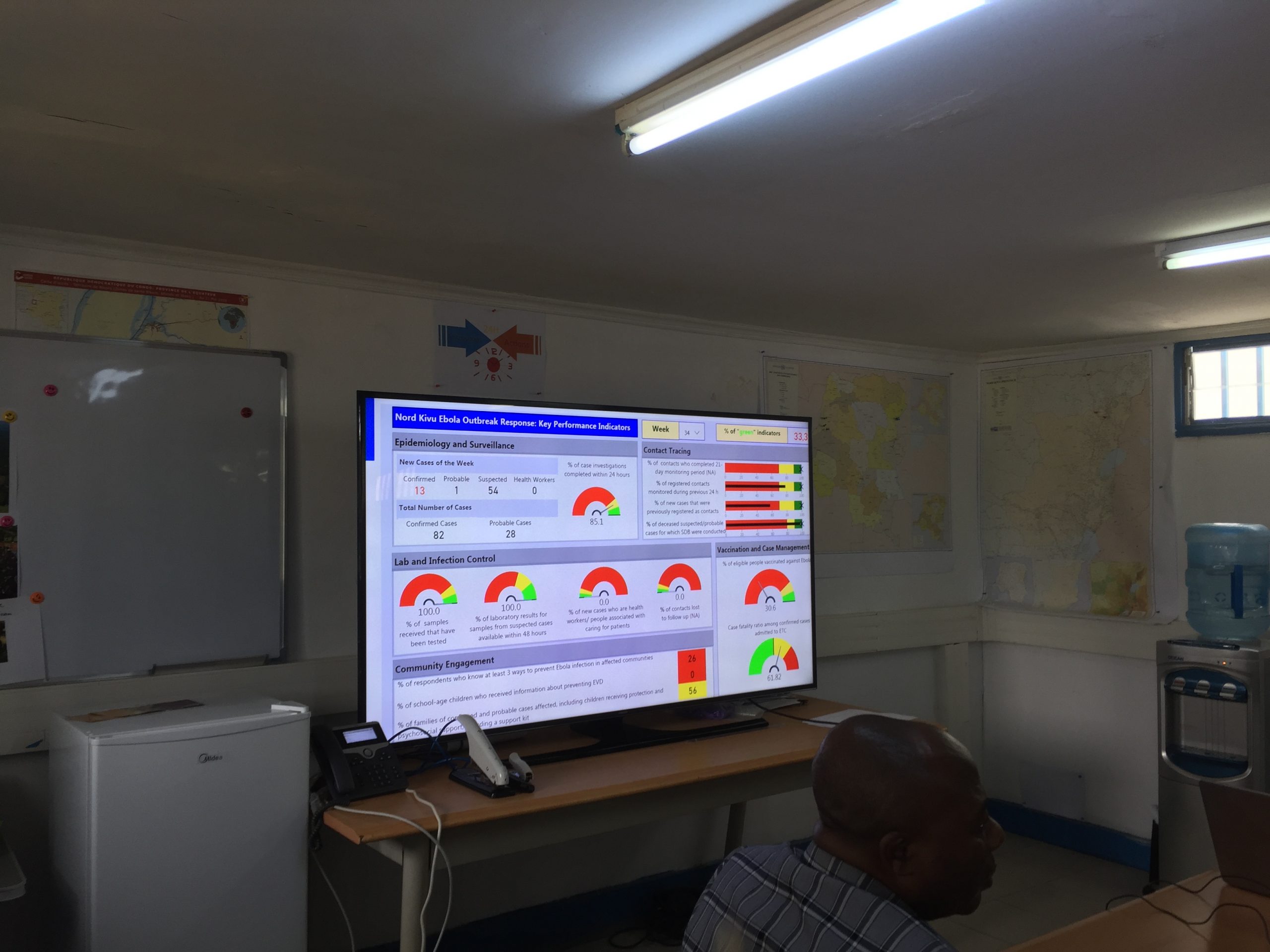
Hold regular real-time evaluations and periodically review performance. UN guidelines exist for this. In fact, in any major disaster response the British government would be the first to complain if the UN did not apply these guidelines. Measure performance against the counterfactual – the model of predicted outcomes that would probably occur if nothing were done – and use ‘net excess mortality all-cause’ and QALYs to justify the opportunity costs involved in health outcomes, not just mortality rates. Publish the dashboard so that everyone can see things like laboratory tests conducted, bed occupancy rates, vaccine deployment, therapeutic development, and ambulance usage in one place. To the extent possible, allow access to the underlying meta-data.

A credible spokesperson fosters trust in a way that a politician cannot. This would not normally be a chief medical officer as the response is not only medical. Nor would it normally be a chief scientific adviser as much of the evidence is anecdotal rather than ‘scientific’. The public need to know the limitations of ‘the science’ and ‘the science’ needs to inform – not lead – political decision-making. Attaching high, medium and low indicators of confidence to ‘facts’ which are actually opinions would help build public trust. Scientists rarely agree completely.  David Nabarro of WHO, Jeremey Farrar of the Welcome Foundation or Mukesh Kapilla of Manchester University, all of whom have real-world experience not just of outbreaks, but of disaster management, academia and science, would have the kind of profile needed.

Risk communications is not the same as ‘Strat-Comms’ (strategic communications) and needs to be STARCC (strategic, timely, actionable, relevant, consistent, and coherent). Messaging is more effective when coming from trusted sources, including celebrities. It’s about addressing rumours and the inconsistencies of human behaviour, not just the implacable rationality of epidemiological data. Every word matters. ‘Boosterish’ dissembling by politicians undermines public health messaging. The public were very quick to spot that vaccines “offered” mean something very different to vaccines “given,” for example. Technical issues like the sensitivity & specificity of rapid diagnostic tests should be explained in detail. It is only this level of knowledge that leads the public to understand how vaccination coverage, however high it is and however effective the vaccine, means that those vaccinated “do not become invincible overnight.” Don’t blame the public if messages like this have not been understood. Consider changing the school curriculum.

Signal that decision-makers understand the difference between the Hippocratic imperative of saving every individual life versus the public health imperative of saving populations. Wearing or not wearing of face-masks is more about this difference than it is about the type of mask or the opportunistic risk of putting them on and taking them off.

Over-centralisation should be avoided, especially as it means introducing inexperienced private-sector partnerships. This means that contact tracing and laboratory diagnostics should be conducted as close to affected communities as possible, preferably by government-led public health services whose capacities have been enhanced.

Pharmaceutical companies are not charities. They are in competition and will only invest in public goods if incentivised to do so, including guarantees that R&D costs will be underwritten by government in exchange for ‘no-profit’ distribution for a limited period. Because of this investment of public money, terms of commercial contracts should be in the public domain. They should not be expected to develop vaccines on a not-for-profit basis, although they should be expected to support equitable distribution. Overt and covert manipulation of research data should be expected. Usually, vaccine efficacity data from clinical trials is not emulated in the real-world and there can be considerable lags in production, which means that public and political expectations over when and how much immunity is conferred through mass immunization need to be managed.

Be wary of un-tested technology, especially when it involves mobile phone apps which, like cash transfers, are fragile at the best of times. Mobile phones, however, have a major role to play in coherent risk communications, especially when linked to location. The Red Cross are world leaders in this.

The media – all of it, not just public broadcast media – has a social responsibility during a pandemic response and needs to re-role accordingly. Absolute and Relative figures should always be used to avoid giving a false impression of what is going on. When the ‘science’ is open to interpretation, expectations need to be managed accordingly. TV and Radio hosts and their producers should take extra care to avoid creating false narratives through provocative framing of apparently innocent and binary questions and then holding politicians to account for “over-promising and under-delivering”. This is not accountability, this is sensationalism. And it can quickly confuse the public and erode trust in the wider effort. All so-called ‘facts’ promulgated via social and mass media should come with a ‘confidence indicator’ attached (as the IPCC does when reporting on climate change, for example). Consideration should be given to establishing a dedicated TV and Radio channel

End

James Shepherd-Barron is a practising international disaster risk management consultant who advised the British government on its Ebola responses in West Africa during the period 2014-2018. He is a Professor of International Disaster Management at Fordham University in New York and author of Absolute Disaster.

IS CASH CONTAMINATED? Are Banknotes Vectors of Covid-19?

Is it true that banknotes do not pose a risk of infection for the public?

According to Cash Essentials, Bundesbank executive board member Johannes Beermann certainly thinks so and has indicated that the risk of picking up coronavirus from handling cash is extremely minimal. “Banknotes and coins do not pose a particular risk of infection for the public,” he said.

And he is right.

Banknotes do not seem to play a major part in what epidemiologists call ‘the chain of transmission’. If they did, incidence of C-19 infection would be much higher. And the way they are made, with their polymer substrates, anti-microbial inks and surfactant varnishes, means that they don’t lend themselves to the transmission of pathogens.

Read more

INFORMATION MANAGEMENT: The C-19 Dashboard

At his first daily press briefing on 30 March 2020, Dominic Raab, the UK Foreign Secretary, referred assembled journalists to the “latest update from our COBRA Coronavirus Dashboard.” He then spent much of the next 40 minutes providing imprecise answers to very precise questions. Much of what he said sounded like spin, not evidence-based decision making. Speaking from behind a podium emblazoned with what is in effect a political slogan rather than a public health message, perhaps the fact that listening to random government ministers speaking to ‘core press lines’ as if voicing over a Hovis bread commercial is the best we should expect.

But one mis-spoken word, one garbled sentiment in such panicky times gives a sense that our leaders are all at sea, floundering in a rip-tide of ad-libbed condescension. And in a frightened world certain only of uncertainty, this steadily but surely erodes trust in those who purport to protect us; a situation not helped by an over-zealous Police service quite demonstrably interpreting well-meaning government guidance with their own Orwellian brand of wooden-brained, judgmental heavy-handedness. A Police state and the wholesale infringement of civil liberties it implies in an era of ‘lockdowns’ and social isolationism is not where any of us want to be, or want to go.

A lot of this is down to wooly communications. OK, in the early stages of the C-19 response the government was trying to nudge us into changing our behaviour by politely suggesting we exercise outdoors only once a day. It became clear that the public had misinterpreted this nudge and had driven in their tens of thousands to walk in Derbyshire’s Peak District, it became clear that the type of dictatorial clarity introduced early on by the French was needed. In France, an ‘attestation’ was needed before leaving the home, one of the criteria permitting such action being ‘daily exercise in the vicinity of the home.’ This clarification was later added to the UK government’s advice.

But we British pride ourselves on our libertarian laissez-fair attitude and resent being told how to behave by the state. Knowing this, and well aware that indefinite lockdowns implode through the weight of their own boredom, tension and loneliness, the government has been careful to take a nuanced approach to the way mass behaviour change is invoked. This also makes good epidemiological sense as to go into lockdown too early – or too late, for that matter – risks causing more problems than it cures.

For a country to succumb in the way the UK meekly has to dictatorial diktat involves high levels of trust in organs of the state, particularly the Prime Minister’s Office. Squander this trust and public sentiment spirals downhill extremely rapidly. We learned this lesson time and again during the Ebola epidemics in Africa over the past decade.

Credibility in an era of social media and instant communications depends on factual information clearly, consistently and coherently explained. Where facts are hard to come by, then explanations of the assumptions behind the analysis will do. The public are not easily fooled. Any sense that science has been interfered with by politics or that unpalatable truths have been dumbed down or politically spun quickly undermines the nation’s trust in the capacity and capability of its leaders. In the final analysis, anything other than clear-eyed realism and total transparency results not just in a loss of credibility, but unnecessary loss of life. This is why Governor Cuomo is doing so well in New York.

As we gird ourselves for the acceleration of this epidemic to its late-April peak, trust in government is wavering. This is largely because, as Giles Whittell of Tortoise Media put it on 30 March 2020, “Governments are generally underperforming as purveyors of reliable information on the pandemic.”

What could they do better?

In Sierra Leone, three months after the Ebola outbreak was declared and one week after a national state of emergency was announced, the national ‘Ebola Operations Centre’ established to manage the extensive control measures needed consisted of little more than two flip-charts, one without paper, and a pile of pens strewn across a dusty table. There was nothing to show that this small room, crowded with empty chairs, was an ‘operations centre’ for anything, let alone an unfolding national calamity. There were no maps and no organigrams on the wall to show who was responsible for doing what, where, and when. There were no graphics charting the progress of the disease or of the measures underway to control it.

The World Health Organization has come a long way since then and by the time of the 2018 outbreaks in DRC had designed an operational template for enhanced coordination and control, including on how to report on what they call KPI’s or Key Performance Indicators. As with the COBRA C-19 Secretariat in London, the Emergency Operations Centre in Kinshasa would gather data from the affected area and from all over the world, compile it into 13 response areas (each with specialist ministry committees), interrogate the data, make their collective analysis, and report their findings to the Minister of Health at 2 pm every day. Rarely did anybody agree on anything. Heated discussions between doctors, epidemiologists, statisticians, logisticians and bureaucrats, both in the room and down the line from all over the world, would ebb and flow in this seething cauldron all morning, ending up as one coherent, easily readable dashboard in time to brief the minister who, one hour later, would brief the world.

Such a ‘management system’ exists. What it should look like is outlined in the ‘World Health Organization Framework for a Public Health Operations Centre’. Produced on the back of lessons learned from countless outbreaks around the world over decades, it has been designed by information managers who know how to present qualitative and quantitative data in easily understandable form. It does not need to be re-invented. It includes data on what UN disaster managers call “4W (who, what, where, and when) mapping” combined with health information management data on aspects such as hospital capacity, bed occupancy, laboratory diagnostics, case management, contact tracing, disease surveillance, supply chain management and human resourcing. Lots of numbers are then transformed into easy-to-understand graphics and supplemented with time-lapse maps to create a single gateway into what is going on in real time. The World Health Organization’s dashboard covers one entire wall of its Emergency Operations Centre in Geneva.

Tracking operational outcomes against KPIs, together with an explanation of what is being done to address shortcomings, is useful for both downstream operational planning and upstream accountability and is a standard operating procedure in international disaster responses, as is regular gap analysis. Reflecting operational performance against pre-determined criteria and benchmarks is critical, not just for strategic oversight and programme adjustment but for better integrating risk communication and community engagement into the overall response … a frequent shortcoming in outbreak responses up until now.

If the British government is using such a dashboard – and it is – then all it has to do is show it to the world, warts and all. When numbers are noisy and the data flaky, all the specialists and the politicians have to do is explain the assumptions behind why they have made the decisions they have. Every sentence is vital; every word critical. There is no room for mis-speaking in such a febrile atmosphere.

Providing such clarity in all its gory detail might confuse – or even upset – some of the public some of the time, but it would stop the media filling in the gaps with its own muddled and simplistic interpretation, much of it designed for effect rather than information. This is why, for example, we consistently hear about ‘how many people died yesterday’ rather than how many died as a percentage of the laboratory-confirmed caseload or whether the rate at which these deaths occurred is accelerating or decelerating, or is above or below that which was expected. Key statistics such as Case Fatality Ratios and explanations on why ‘mortality rates’ are different are not presented at all.

With a dashboard we could see the evidence for ourselves and draw our own conclusions. We could see when the government expects transmission or mortality to peak and when herd immunity might be achieved. From this panoply of graphs and graphics we can deduce our own patterns and work out for ourselves how to plan our lives in the new normal of limbo, lack of livelihood, and lockdown. We neither need nor want to be patronised. We just demand to be informed.

© James Shepherd-Barron

31 March 2020

COVID-19: Is the gain worth the pain?

Summary

If it works, the UK Government’s Covid-19 (C-19)[1] control strategy will cost over £300 billion and save half a million lives, most of them elderly. According to the International Monetary Fund, this level of expenditure will tip the country into recession and require levels of domestic borrowing not seen since the Second World War. Younger generations fear that it is they that will be left paying the price. Whether they deem this price worth paying depends on what value they are prepared to put on human life.

On the basis that each British citizen’s life is valued at somewhere between £5 – £9 million, that each life-year saved is consequently worth about £248,000 and that each victim loses an average of 14.6 life-years from C-19, this article argues that the price is worth paying. At least, for now.

“Yes, there is a high price to pay. But how do you put a price on life?”

(Michael Gove, UK Minister of State, 29 March 2020)

Over the longer-term, Britain’s youth might instead ponder the social and political, rather than economic, ‘price’ involved and prepare to drive a new agenda for change which re-engineers democracy, re-defines civil liberties, puts Climate Change front and centre, and ensures redistribution of wealth through enlightened corporate responsibility.

Whether the “world’s beauty will be revealed afresh” is in their hands.   

Introduction

The UK Government’s C-19 suppression strategy and its demands for extensive country-wide social isolation and ramping up of NHS critical care capacity may result in between 35,000 and 70,000 excess deaths[2] across the country by the end of December 2020 (University College London). This is in addition to the 30,000 that would die anyway from Acute Respiratory Infections such as seasonal Flu (Public Health England). Against the number of premature deaths predicted by ‘zero option’ (do nothing) modelling where up to 560,000 UK citizens would die (Imperial College) this represents the saving of around half a million lives.

However, this will come at great social and economic cost, leaving some to wonder whether such draconian disease control measures are worthwhile? Could the social and economic consequences of the virus be deadlier than the virus itself?

The answer, at least over the short term, appears to be ‘No’. The saving of 500,000 lives is deemed to be worth the billions of pounds committed by the UK Government. But how was that conclusion reached? And in what context does it hold good when the question has yet to be tested against society’s assumption that “every life is priceless” when, from a risk management perspective, they are not?

With the peak of transmission estimated to be in late May / early June, estimates of predicted mortality remain uncertain. But one aspect is crystal clear: The length of the epidemic and the numbers that die are, to a major degree, dependent of the public’s psychological resilience and their ability to break the chain of transmission through sustaining physical distancing from one another for at least three months, possibly longer.

Much clearer is that the strategy now underway will tip the global economy into recession. Most of this money will need to be borrowed now and repaid by future generations.

Are those future generations, some of whom are not yet born, willing to pay such a price, especially when most of those who die are elderly men with pre-existing chronic illnesses (co-morbidities) and who, according to some public sentiments, “only have a few years left anyway”? After all, as the Chief Economist of the UN’s World Food Programme recently put it, “There is only so long an economy can be locked down without inflicting lasting damage.”

The ‘damage’ he is referring to is not measured in short-term mortality alone – a few years from now this disease will be endemic and treated much the same as seasonal Flu or a common cold is – but the long-term consequences of global economic shut-down.

To answer this question, we need to know how much a life saved – or, more specifically, a life-year gained – is worth to society. Only later on, will we need to know what the potential social, economic and political benefits might be in terms of, say, climate change, democratic accountability, and corporate responsibility.

The Humanitarian Dilemma

Whatever control strategy is applied to the C-19 pandemic, two things are clear: A lot of people will die prematurely – many unnecessarily – and the social and economic cost will be enormous. Leaving aside the ethical considerations, society is faced with the same ‘humanitarian dilemma’ faced by disaster managers when coordinating responses to international calamities where resources are never enough, the data unreliable, and uncertainty the norm: Is the predicted gain in terms of avoidable deaths averted by any one intervention ‘worth it’ in terms of the financial cost involved? How does one balance the cost of the prevention against reducing the risk of a premature death that may never happen? If there are not enough resources to do both, is it more cost-effective to improve access to safe water in a cholera epidemic or vaccinate the children? Is it better to distribute the full value of cash grant required to keep a family in Northern Syria alive to half the families that need it, or half the amount to all the families?

The answer to ethical conundrums like these are not as difficult to work out as they appear, and, although away from public view, disaster managers make such life-and-death decisions all the time. So do insurance companies, government transport departments and NHS economists. Each uses a form of cost-benefit analysis (CBA) to help in their decision-making. And each involves the difficult moral question of how to value human life.

The Value of a Life

Although the concept of placing a monetary value on human life is controversial, the ability to do so is essential when making informed and rational decisions on resource allocations. Understandably, for ethical, religious or philosophical reasons, many people oppose valuation of something commonly perceived as priceless and argue that no monetary figure could possibly compensate entirely for the loss of a human life.

Nevertheless, comparing different options requires a common metric against which to measure impact. Usually, this is money. This immediately poses a challenge to planners as it requires a value be put on the direct effects on people vis-à-vis ill-health, injury and death. The UK’s Department of Transport uses a Value of Statistical Life (VSL). Disaster managers in the World Health Organization use Quality Adjusted Life Years (QALYs). Others use ‘Micromorts’ or ‘Judgement Values’ (J-values). Underpinning each approach are the triple concepts of life expectancy, earning potential and quality of life where a monetary value on future years of life is calculated based on discounted income (e.g GDP per head) and work-life balance (the ratio of time spent working to time not spent working). This is part of the Calculus of Calamity[3].

Although many would argue that the value they place on their life is infinite, reality reveals that this is not the case. There are limits to the amount we are prepared to pay for marginal increases in longevity – for example, to have expensive safety features fitted in our cars – and increases in occupational risk of death are often acceptable if the monetary compensation is substantial enough, as evidenced by the existence of ‘hazard pay’.

Another challenge is that most people have great difficulty in understanding the varying levels of risk to which they’re exposed. This is especially true when the impact is intangible and far off, as it is with a deadly pandemic like C-19. Yet another is that any attempt to put a figure on the value of human life has to take age and disability into account. Most people agree that it’s reasonable to suggest that the life of a new-born baby should carry a far higher value than that of someone in their eighties. Equally, people usually recognise that a double amputation might save the life of the patient but that this would mean additional years of life gained would be subject to a greatly reduced quality of life.

To accommodate such value judgements, health professionals and disaster managers use something called a ‘statistical life year’ (SLY) when making life and death decisions. Improved life expectancy in terms of ‘life years’ is a much better characterisation of the benefits to be gained by mitigating risk than ‘lives saved’. This is because, in fact, nobody’s life can ever be saved: the best that can be done is to return an individual’s life expectancy back to what it was before the hazard occurred. The SLY calculates the value to each individual of one additional year of healthy life gained by a particular intervention, adjusted for disability.

In the UK, where each citizen’s lifetime value to society is estimated to be worth between £5 – £9 million, the SLY value is estimated to be £248,209 (Thomas, 23 March 2020). This analysis is informed in part by a well-known economic effect called ‘The Preston Curve’ which demonstrates that we get to die earlier as we grow poorer[4] (Preston, 1975).

This implies that the government would be justified in spending about a quarter of a million pounds on any intervention that would extend a single citizen’s life expectancy by one year. With each victim losing 14.6 life-years on average and, in the best case, 500,000 lives being saved, the cost of control measures must be lower than £1.8 trillion … which, at the moment, they are[5].

C-19 as a Natural Hazard

Dividing the cost of the intervention by the aggregated number of life-years expected to be gained by the intervention allows disaster managers to calculate the relative risk of each intervention without having to bring unnecessary value judgements into the equation. Assessing cost-benefits in this way allows railway safety to be put on the same footing as medical treatments, natural hazard risk reduction and public health.

In this sense, our response to the C-19 pandemic is no different to our response to natural hazards such as Earthquakes or Tsunami; various response options, each with different risk parameters and expected outcomes, have different social, political and economic costs against which the short- and long-term implications on life expectancy and quality of life have to be considered.

All options have to be considered against the ‘Zero Option’, the ‘business as usual’ counterfactual of doing nothing. In the UK, modelling suggests this would lead to the C-19 epidemic peaking in late May/early June and being over by September 2020. But this would lead to roughly 550,000 lives being lost i.e a loss of life comparable to that suffered by the UK throughout the entire course of the Second World War.

Other options are equally unenviable. For example:

A 12-month lockdown during which fully equipped hospital capacity was prepared, followed by an additional four-month shutdown a few months later could cut fatalities by two thirds.

A 12-month lockdown during which a vaccine was developed and a large-scale immunisation programme was carried out would reduce fatalities to less than the average toll on people caused by seasonal influenza each year i.e about 13,000 premature deaths, being less than the average number of 17,000 influenza-related deaths in the UK per year (Public Health England, 2019).

Cost to Society

Meanwhile, the constraint which all but the ‘zero option’ have to consider is that C-19 countermeasures should not decrease GDP per head so much that the UK population as a whole loses more life-years than it gains from such measures. Public health protection schemes should not be put in place if their costs are large enough to cause the nation’s economic output to fall so significantly that it will cause more loss of life and if the scheme had never been implemented in the first place.

It is likely that a recession resulting in a general fall in economic output of 6.4% per person over a prolonged period would cost more life-years than would be restored by current and future C-19 countermeasures. This observation is based on comparisons from the economic recession of 2008-2009 where GDP per head fell by 6% and did not recover until 2015, and its negative impact on life expectancy. Under the scenarios mentioned above, modelling suggests that each victim suffers about 14.6 life-years (years of healthy life) lost.

Current macro-economic analysis suggests that planned countermeasures will severely dampen economic activity. Both the International Monetary Fund and the Centre for Economics and Business Research now predict that the pandemic will cause global GDP to decline twice as much as during the financial crisis of 2008. Furthermore, it raises the prospect of a 1930s-style recession. Such an outcome, if it were to come about, would cause a loss of life-years to the UK population that would far exceed the predicted toll under the ‘zero option’. It would be worse than doing nothing, in other words.

Thus HMG faces health and economic challenges of equal severity. It needs to institute reasonable countermeasures against C-19 but it needs, at the same time, to attempt to restrict the coming recession to not much worse than the 2008 financial crisis.

The Future

Whatever lies ahead, it is already becoming clear that the impact of C-19 will be deep and lasting; not just in the UK and Europe but in poorer and conflict-affected parts of the world which are woefully unprepared and lack the capacity to respond. Imperial College in London estimates that over 40 million people from such areas might die.

We can only hope that Alexander McCall-Smith was right when he said, “Our world, though diminished, will be much bigger, its beauty revealed afresh.”

© James Shepherd-Barron

30 March 2020

References

Thomas: J-Value assessment of how best to combat Covid-19; Unreviewed manuscript, 23 March 2020

Social Value UK: Valuation of a life, 9 June 2016

Ferguson et al: Impact of non-pharmaceutical interventions to reduce Covid-19 mortality and healthcare demand; Imperial College, 16 March 2020


[1] C-19 is the name given by WHO to the disease caused by the virus SARS-CoV-2

[2] Excess Deaths are those that occur over and above those that would occur anyway over the same period, based on previous data.

[3] Calculus of Calamity – A Stochastic Risk Optimisation Model for Managing Disasters; James Shepherd-Barron, KissyFish Books, 2019

[4] The Preston curve indicates that individuals born in richer countries, on average, can expect to live longer than those born in poor countries. However, the link between income and life expectancy flattens out. This means that at low levels of per capita income, further increases in income are associated with large gains in life expectancy, but at high levels of income, increased income has little associated change in life expectancy. In other words, if the relationship is interpreted as being causal, then there are diminishing returns to income in terms of life expectancy.

[5] UK Government control measures for the three months March-May 2020 inclusive are estimated at £320 billion

CASH & CORONA: What can the Cash Management industry do?

Access to cash has always been critical to how we survive and recover from natural disasters. The Covid-19 pandemic is no different.

Unlike with a tsunami or earthquake, however, where the danger is clear and present, some people think that handling money and making payments can pose an invisible risk of disease transmission. This is why the Kenyan Government recently determined that “Cash-less financial transactions have to be further enabled to curb the risk of transmitting Covid-19 virus through banknotes and coins” and why the Peoples (Central) Bank of China disinfected and eventually replaced all its banknotes as the epidemic took hold in Wuhan.

In fact, neither measure was based on any epidemiological evidence, with both being driven by a combination of politics and sociology … which is understandable in a climate of uncertainty where sentiment is often as important as science.

This is not to suggest that banknotes don’t harbour infectious diseases; they do. But, as Mike Lee, CEO of the ATM Industry Association rightly points out, “Since people don’t usually sneeze or cough into their banknotes, it is disingenuous to single out cash as a medium of transmission as they harbour no more germs than any other plastic or paper surface.” It’s true. Cash, debit cards, ATM keypads and touchscreens are surfaces like any other and, when contaminated, act as vectors (fomites) of transmission. In this sense, says Bruce Renard, Executive Director of The National ATM Council in the US, “Money and ATMs pose no more risk to our health than mobile phones or doorknobs.”

So, knowing the passive role Cash, ATMs and Payment cards might be playing in Covid-19 transmission, what can industry bodies and financial service providers do to help society overcome this current crisis and break what the epidemiologists call ‘the chain of transmission’?

I would like to suggest six concrete things Banks, Credit Unions, ATM Deployers, and Card Companies could do, and do now:

Enable ATM screens to display key public health messages. Having talked to both the World Health Organisation in Geneva and the Centers for Disease Control in Atlanta, these, in order of priority, should be:

  • Wash Hands for 20 seconds using alcohol or soap and water.
  • Maintain a distance of at least 2 metres/yards between people.
  • Cough or Sneeze into your bent elbow.
  • Say hello without touching.
  • Avoid touching your face.
  • Reduce your social contacts by at least 75%.
  • Wipe off surfaces daily with soap or alcohol and leave to air dry.

An even shorter version would be:

HANDS Wash them often
ELBOW Cough into it
FACE Don’t touch
SPACE Keep 1 metre apart
HOME Stay in if sick
CONTACTS Reduce face-to-face meetings by at least 75%

Each message could be accompanied by some text expanding on the reasons for each action point. They could appear singly or together, and in static or moving graphic form. A public messaging campaign similar to this was undertaken by the Government of Nepal after the Earthquake of 2016, where ATMs in Kathmandu provided details of where to obtain reconstruction grants and how to build back safer.

Place distance markers in the ATM lobby or on the pavement / sidewalk to clarify the minimum social distance. We are already used to seeing ‘safe distance’ markers on our roads.

Attach hand sanitiser dispensers to ATMs: To be replenished by the ATM owner or storekeeper.

Decontaminate internal and external ATM surfaces. ATM facias, touchscreens and electronic payment terminals should be regularly wiped down by operators and storekeepers, with a written record displayed nearby. This is no standard operating procedure in public toilets. Decontamination of an ATM’s internal workings by specialised engineers already takes place. This could be done more frequently, with a prominent sticker attached to the ATM saying when it had been done.

Include a ‘Make a Donation’ button in the user interface. This is already a default setting in many online payment schemes, so should not be too problematic from a software perspective. Suggested beneficiaries would require a locally appropriate menu of options but could include WHO’s Covid Fund (in support of less-developed countries) and the national Red Cross society.

Match any donation with a rebate on the interchange (or other) fee. This is not as difficult as it appears as, A) Fees levied by Money Transfer Agents are often temporarily waived for limited periods following natural disasters; and B) Loss of profit can be offset as a charitable donation under ‘social responsibility’ provisions.

If you like these proposals PLEASE share, don’t just ‘like’, as this will help nudge action.

If you have any other ideas on what the cash and cash management industries can do to help, please shout out to me at [email protected]