CONTAGION

This is an excerpt from my book ABSOLUTE DISASTERS, published in 2017 at a time when we didn’t talk much about Coronaviruses. If you want to know more it is available on Amazon.

Anyone who saw Dustin Hoffman play a manic and obnoxious doctor from the US Centres for Disease Control (CDC) in the film Outbreak, or Kate Winslett in the more recent and realistic film Contagion will understand why there is reason to be alarmed about the threat posed by emerging infectious diseases. Emerging and re-emerging infectious diseases are those that are resistant to all known antibiotic therapies and/or for which the population has little or no immunity.

Influenza – the ‘Flu’ – will be the most likely cause of any future killer pandemic. And epidemiologists agree that it is not a question of ‘whether’ but ‘when’ such a killer will strike. We’re not talking about the kind of Flu that knocks us out for a few days every other winter, but a mutated strain against which we have no built-in immunity and for which there is neither cure nor vaccine.

That’s why Avian and Swine Flu caused such a commotion a couple of years ago, with the UN scaring the wits out of the world by suggesting that up to 150 million people could die. But statistical regression models clearly demonstrate that they were right then and they are right now. The threat has not receded.

Two recent outbreaks – the 2009 H1N1 Swine Flu and the H5N1 Bird Flu that emerged in Asia a few years earlier – failed to become the global killers predicted by the UN even though millions were infected. Bird flu was much the more virulent of the two, killing about half of those infected, and the fear is now that there will be a global resurgence that combines the virulence of the H5N1 with the transmissibility of the H1N1. The Spanish Flu of 1918 was one such “doomsday strain”, killing between 50 million and 100 million people; around 4%-7% of the world’s population at the time and many times more than were killed in the First World War.

It is easy to imagine the mass panic that would result if something similar to ‘Spanish Flu’ were to emerge again. Power-station workers, doctors, delivery drivers, water treatment engineers, and petrol station managers would either be sick or dead. Hospitals would close their doors. The lights would go out, the shops would be empty, and cities would grind to a halt. With people fleeing to remote rural areas, law and order would break down. This is the scenario so vividly – and, according to CDC in Atlanta, so accurately – portrayed in the film Contagion.

  Less than 2% of viruses that exist in the wild are known about.

According to the US Institute of Medicine, if the next major infectious disease is not from a previously unknown bug, the biggest threat comes from HIV-AIDs, Hepatitis-C, Tuberculosis (TB), and new, more lethal variants of Coronavirus, including Influenza. They also think that hospital acquired infections will also pose a growing threat as drug resistance increases and new strains of Streptococcus or Staphylococcus emerge. Already, there is only one antibiotic left that controls spread of the “super-bug” Staphylococcus aureus, and there are signs that even this is losing its effectiveness. TB, cholera, and malaria are not only beginning to make a comeback, but are doing so with more virulent and drug-resistant forms.

In reality, there are bugs out there which can kill up to 80% or more of all people they come into contact with, and for which there is no cure. Except for the most exotic – by which we normally mean ‘deadly’ – you will have heard of most of them: Influenza, AIDS, Ebola, and Bubonic Plague, for example. They may well ‘self-limit’ – i.e die out on their own accord – but not before millions are dead or dying.

But you are unlikely to have heard of Henipah, a particularly nasty form of virus found originally in fruit bats. Fruit bats have evolved with this virus over millions of years, and because of this co-evolution, they experience little more from it than the fruit bat equivalent of a cold. But once the virus breaks out of the bats and into a species that hasn’t evolved with it, a horror show can take place, as one did in rural Malaysia in 1999. It is probable that a bat dropped a piece of saliva-covered fruit into a forest piggery. The pigs became infected with the virus, and then amplified it. And then it jumped to humans. It was startling in its lethality. Out of 276 people infected, 106 died and many others suffered permanent and crippling neurological disorders. There is no cure or vaccine. Since then there have been twelve similar, though thankfully smaller, outbreaks in South Asia.

There are many more diseases with more familiar names such as Measles, Pertussis (Whooping Cough), Diptheria, Tuberculosis, Yellow Fever and others, which kill an awful lot of people around the world every year, but about which we hear little because we think that vaccination has incurred life-long immunity. Diptheria in particular is making a comeback in countries of the former Soviet Union where health infrastructure is crumbling and vaccination coverage is a shambles. In developed countries, the situation is not much better, with vaccination coverage rates one third of what they should be to ensure ‘herd’ immunity[1].

Politics and trade also play their part. Intellectual property rights are frequently flouted by manufacturers in developing countries who make generic copies of drugs that are under patent protection, not always with the permission of the patent-holder. Some of the drugs manufactured in this way contain no active ingredient, or contain half the prescribed dose … which is worse in many ways, as it fails to cure and stimulates resistance at the same time [see Disaster Misperception # 77].

Nearly two-thirds of emerging infectious diseases that affect humans originate in animals, with more than two-thirds of those originating in wild animals. The scope of the challenge this presents is huge and complex, not least because it is estimated that only one percent of viruses that exist in wildlife are known. And, with modern air travel and a robust market in wildlife trafficking, the potential for a serious outbreak in a large population centre is growing all the time. Increased ease of travel – one million humans are in the air at any one time – has radically altered the speed at which microbes can meet and recombine, and rendered us hideously susceptible to what results. Today, an aggressive transmissible influenza with an incubation period of a few days could be on every continent within 36 hours.

In other words, outbreaks of potentially deadly diseases reflect what we are doing, either deliberately or unwittingly, rather than just being things that happen. In this – and as the Ebola epidemic so vividly demonstrated – epidemics are no different to any other form of so-called ‘natural’ disaster.

We live in a world that, at least from the point of view of a virus or a bacterium, has changed very little. Our world remains fraught with the risk of new pandemics as microbes that have never encountered each other before combine to form mutant stains which will cause diseases capable of spreading in ways neither of their ‘parents’ could ever do.

The appearance of a virus capable of infecting 40% of the world’s population, and killing unimaginable numbers of them is not as far-fetched scenario as you might think. This is what Laurie Garrett said about Bird Flu (Avian Influenza) when it was making headline news in the years after 2005:

“The havoc such a disease could wreak is commonly compared to the devastation of the 1918-19 Spanish Flu, which killed over 50 million people in 18 months. But avian flu is much more dangerous. Doom may loom. But note the ‘may’. If the relentlessly evolving (H5N1) virus becomes capable of human-to-human transmission, develops powers of contagion typical of human influenzas, and maintains its extraordinary virulence, humanity could well face a pandemic unlike any ever witnessed.

Or nothing could happen at all.

Scientists cannot predict with any certainty what this virus will do. Evolution does not function on a knowable timetable, and influenza is one of the sloppiest, most mutation-prone pathogens in nature’s storehouse”.

Meanwhile, a horse dies mysteriously in Canada, a chimpanzee in Central Africa, a few pigs in Australia, and whole flocks of chickens in Indonesia. People in regular contact with these animals fall sick, and most die. These real-life cases, and others involving bats and unknown numbers of even more exotic species, represent not just isolated events, but a trend in the transmission of new diseases from animals to humans.

International health experts call such diseases ‘zoonotic’, meaning animal infections that somehow cross over to infect people. About one third of the 15,000 or so diseases known to man – including the modern day scourges of malaria, HIV, and more recently, Ebola – are in this category. For the most part, these diseases are the result of infection by one of three types of pathogen or bug: viruses, bacteria, and fungi. The most troublesome are viruses, mostly because of their abundance, their ability to adapt quickly, and the fact that they don’t respond to antibiotics. In the 1995 film Outbreak, a sweet little Capuchin monkey carrying a “deadly virus” that was going to cause “the greatest medical crisis in the world” caused anxiety in millions of cinema-goers. The film gave zoonotic infections the Hollywood treatment but stripped of the hyperbole, it contained elements of reality. Zoonoses are a major threat to human health, and it is considered “highly likely” that the next pandemic will originate from an animal, as Ebola did.

Within the viral camp, there are two main sub-groups, the DNA and RNA[2] viruses, with the RNA viruses being particularly worrisome. HIV-AIDS is caused by a zoonotic RNA virus. So was the Spanish Flu Laurie Garrett referred to above. And so are Ebola, Marburg, Lassa, West Nile, Dengue, Rabies, Yellow Fever, SARS, and all those other spooky names which strike the fear of God into anyone who has seen blood oozing from Kevin Spacey’s eyes after being infected by some unidentified bug in the movie Outbreak.

There are an awful lot of RNA viruses. They exist in the oceans, in rivers, in the soil, in forests, and in urban jungles. According to Professor Eddie Holmes of Penn State University, one of the world’s leading virologists, it’s possible that every species on the planet, bacterium, fungus, plant, and animal, supports at least one RNA virus, though, as he puts it, “we don’t know for sure because we’ve only just started looking.”

It is only fairly recently that marine biologists have come to realise that the open ocean is teeming with viruses of a surprisingly wide range of types. Not all of these viral particles are infectious, as ultra-violet radiation inactivates most of them in the photic zone. However, the energy surge that is a tsunami cascades water from great depths and unleashes it into a completely alien environment that includes oxygen and sunlight. In this environment, viruses not usually encountered collide with wounded or drowning humans to cause illnesses not usually seen[i].

We do know, however, that influenza viruses – which are RNA viruses – can be lethal and that there are three types, rather unimaginatively called A, B, and C. The A-type viruses cause the most severe epidemics in humans, and only this type is further classified into sub-types on the basis of the two main surface proteins, one called Hemagglutinin (H), the other, Neuraminidase (N). There are 16 known H sub-types, and 9 known N sub-types, which means that at least 144 combinations, or strains, are possible. So far, only three (H1N1, H1N2, and H3N2) are in general circulation among people. In the mid 1900’s, scientists from the Rockefeller Foundation and other institutions conceived the ambitious goal of eradicating some infectious diseases entirely. They tried hard with Yellow Fever, spending millions of dollars over many years, and failed. They tried hard with Malaria, and failed. They tried again with Smallpox, and succeeded. Why? The differences between these three diseases are many and complex, but probably the most crucial one is that Smallpox resided neither in a reservoir host, nor in a vector such as a mosquito or tick. Its ecology was simple. It existed in humans and humans only, and was therefore much easier to eradicate. The campaign to eradicate Polio, which is still ongoing, begun in 1998 by WHO, is a realistic effort for the same reason: Polio isn’t zoonotic. Eradicating a zoonotic disease, whether a directly transmitted one like Ebola, or an insect-vectored one such as Yellow Fever is much more complicated, because to exterminate the pathogen you either have to exterminate the species in which it resides or interrupt transmission in some other way.

End

James Shepherd-Barron is an independent Disaster Management Consultant and has an honorary doctorate in International Public Health & Epidemiology.

[1] Herd immunity describes when the vaccination of a significant portion of the population provides a measure of protection for individuals who have not developed immunity. The greater the proportion of individuals who are resistant, the smaller the probability that a susceptible individual comes into contact with an infectious individual.

[2] DNA stands for ‘deoxyribonucleic acid’, a self-replicating material which is present in nearly all living organisms as the main constituent of chromosomes. It is the carrier of genetic information. RNA stands for ‘ribonucleic acid’ and its principal role is to act as a messenger carrying instructions from DNA for controlling the synthesis of proteins.


[i]              Suttle et al: Do viruses control the oceans?; Natural History Magazine, Vol.108, 1999
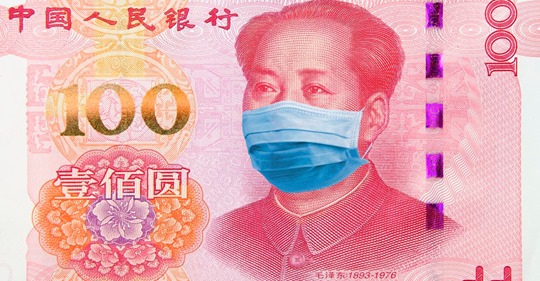
CAN CASH KILL YOU? The Potential Mortality Effects of Physical Currency

James Shepherd-Barron was Special Adviser to the Minister of Health in Sierra Leone in 2014 during the early phase of the West Africa Ebola crisis and DFID’s Humanitarian Health Adviser in the Democratic Republic of the Congo during the Ebola outbreaks of 2018. A former official in the World Health Organisation, he is an independent disaster management consultant.

SUMMARY

Disinfection of all banknotes in Hubei province by China’s central bank, the People’s Bank of China, as part of its Covid-19 outbreak response strategy demonstrates that physical currency plays a more important role in the control of outbreaks of communicable diseases than hitherto recognised by international health actors.

It is possible that contaminated banknotes present a public health risk for transmission of infectious diseases by acting as potential vectors, fomites and reservoirs for a wide range of bacteria and viruses, including Ebola Virus Disease (EVD) and the new Corona virus (Covid-19).

The extent to which banknotes may or may not play a direct role in ‘the chain of transmission’ is only part of the story. No less relevant is the belief among affected populations that they do. And this belief can have adverse secondary consequences when it comes to implementation of outbreak control measures.

International and national health authorities could take more robust measures to address the potential threat to public health posed by banknotes in ongoing outbreaks and should work with the cash industry – specifically, members of the International Currency Association – to ensure that the disinfection and eventual replacement of banknotes with disease-resistant alternatives becomes an integrated part of any control strategy for diseases of epidemic potential.

BACKGROUND

In June 2014, just as the West Africa Ebola epidemic was gathering momentum, Kenema hospital in Sierra Leone was attacked by an angry mob armed with machetes bent on destroying the Ebola Treatment Facility and killing its patients and staff, particularly its international staff[1]. After a two-hour running battle, the attack was only just thwarted by the local police, thereby saving the lives of many, including the author.

But what had roused the mob to such excess in the first place? Partly, and as always with Ebola, a particularly nasty and deadly disease whose chain of transmission is not widely understood in Central and West Africa, the motivation was fear. The townspeople did not want suspected Ebola cases imported into their town; a disproportionate number of local health staff working at the facility had already died, and the fear was palpable.

Another reason was that the residents of Kenema had known for some years the hospital housed an internationally funded haemorrhagic fevers research laboratory[2] which, over time, had led to local suspicions that biological agents were being developed there.

Thirdly, and perhaps the biggest motivation of all, rumours had circulated wildly in the market to the effect that the local currency had somehow become infected – perhaps deliberately – with the virus, resulting in a massive disruption to normal trading activity. Within hours stallholders, taxi drivers and guest-house owners simply refused to handle any form of money, even when wearing rubber gloves, and a barter economy took over. Within days, market stalls shut up shop across Sierra Leone and it was many months before normal economic activity resumed[3].

Four years later, in 2018, first in Equateur and then in North Kivu Provinces of the Democratic Republic of The Congo (DRC), much the same thing happened. First it became difficult to buy goods in local markets with physical currency and then Ebola Treatment Centres and national and international health staff began to be attacked.

In all three outbreaks, social mobilisation programmes tailored to local anthropological and demographic conditions had been quickly instituted as a key component of the outbreak control strategy. Despite heroic efforts by the governments concerned, the World Health Organisation, NGOs and others to correct erroneous information, rumours that cash was playing a role in transmission of EVD would not go away. Not only did this have the immediate consequence of disrupting local economic activity, but it fostered a climate of suspicion which in turn led to the outbreaks being extended in both time and space. The consequence in all three cases was that people died unnecessarily. Clearly, public-health messaging wasn’t working.

So, what more could be done when it comes to the role of physical currency in communicable disease outbreaks in general, and EVD and Covid-19 outbreaks in particular?

DISCUSSION

Social Mobilisation

In terms of their potential to act as vectors, fomites or reservoirs of harmful microbiological pathogens it is theoretically possible for physical currency to play at least an indirect role in disease transmission (Kumar, 2009)[i]. But in practice there is no evidence that anyone has ever died after handling a contaminated banknote. As the stories above make clear, however, the epidemiological evidence is one thing; human belief and behaviour is quite another.

Through the first year[4] of the Kivu response in DRC, many local people living in affected areas expressed the belief that Ebola did not exist; had supernatural origins (e.g. witchcraft); was created by politicians in order to influence elections; or was introduced by foreign non-governmental organisations in order to make money (Baggio, 2019)[ii].

In a survey of knowledge, attitudes and practices about transmission routes for EVD conducted in Senegal in 2017, nearly half (47%) of respondents thought that banknotes were one of the main modes of transmission (Lakhe, 2018)[iii]. It is no surprise to see that rumours of banknotes that have been deliberately infected with deadly diseases can lead to politically motivated outbreaks of violence perpetrated by ill-informed or superstitious people on national health workers and foreign aid staff. The impact can be particularly severe in the case of EVD. But even with less virulent diseases such as Covid-19, “fear can be as deadly as the illness itself.”[iv]

The question of whether or not banknotes can act as vectors or fomites of disease is contentious and, over the years, has given rise to the perpetuation of many myths. These myths have arisen in large part because of the low priority given to any statement to the contrary. In part, this is down to the contradictory nature of the little evidence available[5] and poor analysis has been exacerbated by simplistic and ill-informed reporting in the media. A local newspaper in Nigeria, for example, published an article during their Ebola outbreak of 2014 that artfully blended fear, myth and poor health messaging entitled ‘Fears that Ebola Virus Disease (EVD) could be transmitted by exchange of paper currencies may not be completely wrong …!” (Vanguard News)[v]

Persistence

As with much so-called ‘evidence’ it is possible to find contrasting views in academic literature. In a 2014 travel advisory, the European Commission’s Health Committee quoted WHO guidance at the time to the effect that “You cannot contract Ebola by handling money.”[6]  Yet a 2016 study to assess the potential contribution of fomites to EVD infection in humans demonstrated that EVD remains infectious for 6.2 days under air-conditioned hospital conditions and for 2.5 days under environmental conditions on blood-spotted banknotes indicating that “EVD-contaminated items such as syringes and banknotes may pose a serious risk to humans” (Westhoff Smith, 2016)[vi]. The peer-reviewed article does not, however, mention how unlikely it is that a banknote can become contaminated with the blood or secretions of a bed-bound Ebola patient shedding the virus.

The extent to which hand-to-note and note-to-hand transmission occurs is determined not just by the environment but by the type and persistence of the pathogen involved. The main factors affecting survivability of pathogens on the surface of paper money is the presence of organic matter, solar radiation, temperature and humidity (Taylor, 2007)[vii].

Shigella, various Mycobacteria and Clostridium difficile can survive for months on a banknote’s surface, while Corona viruses, Severe Acute Respiratory Syndrome (SARS) viruses, Rhinoviruses, and Cholera vibrio persist only for a few days (Kramer, 2006)[viii]. One study that looked at the ability of influenza viruses to infect a cell culture after varying amounts of time on a banknote showed survival times from 48 hours to 17 days, depending on the environment and how they were deposited on the banknote (Thomas, 2008)[ix]. There is no information in the papers reviewed for this article on the persistence of EVD on physical currency.

Paper currency is not made of paper, but a mix of cotton and linen. It is multi-layered and absorbent and therefore allows for bacteria and viruses to reside within the substrate as well as on the surface of both sides (El-Dars, 2005)[x]. This makes it a potential reservoir, not just a fomite (Kumar, 2009).

The longer paper currency remains in circulation, the more opportunity there is for it to become contaminated. Lower-denomination notes, being the most often handled in developing countires, are the most contaminated[xi]. It must be assumed that the more engrained the organic matter – dirt, sweat, and dead skin – the greater the likelihood of a given pathogen persisting (though there is currently no official evidence for this). Low denomination banknotes in West Africa have usually been in circulation for so long that they have become dirty to the point they are scarcely recognisable.

Levels of contamination on paper currency varies widely between countries (Varusha, 2017)[xii] and polymer notes are significantly less contaminated than cotton/linen-based notes (Vriesekoop, 2010)[xiii].

Public Health Messaging

In the case of DRC’s two Ebola outbreaks, World Health Organisation staff in the field at the time[7] argued that such knowledge was less relevant than it might be in other epidemic situations owing to the fact that the life-cycle of EVD makes it unlikely that cash (paper money) would be passing hands during the phase of peak transmission. This is when the patient was either dead or close to death and, if at home, surrounded by family members. It should also be noted that cash and voucher distributions[8] were not encouraged in the affected areas as it was assumed that this would stimulate mingling of potentially infected people in marketplaces – a situation best avoided – and undermine efforts at establishing the vital 21-day period of self-isolation.

WHO also argued that addressing the issue of paper currency being a potential vector for disease transmission in public health messaging could be counter-productive as it would only serve to dilute the simplest and most effective message of all – that of the need for regular hand-washing with soap and (chlorinated) water, particularly before and after handling of food[9].

Food Security

Ebola outbreaks in Africa have had an extremely negative impact on what is often an already fragile food security situation. Reduced farming activities as well as disruption of trade following travel restrictions and market closures have resulted in food shortages and high food prices in Ebola-affected countries and beyond (OECD, 2014)[xiv].

New Technologies in Banknote Production

According to specialised banknote printers and ink manufacturers it is feasible to include anti-microbial agents in the banknote substrate, ink, or varnish. There is even an urban myth that this is indeed what the Swiss authorities intend to do in the event of a pandemic. However, they also feel such technologies would be unnecessary as these varnishes can include surfactants which make it difficult for any contaminant, including oil, water, organic materials and pathogens to remain on the surface for long[10]. As far as pathogens are concerned, this claim has not been verified by primary research.

Precedent

There is precedent for the introduction of new banknotes in humanitarian settings. In Libya, for example, in 2011, the British government introduced a new paper currency (printed by De La Rue) following the overthrow of Col. Gaddafi.

There is also precedent for disinfection of existing banknotes. As part of its Corvid-19 outbreak response strategy in February 2020, the People’s Bank of China, disinfected all banknotes in Hubei province which had potentially been in contact with the new virus. The process involved the use of ultraviolet light, high temperatures and then sealing and storing the notes for 7-14 days.

Cost

The cost of banknote production is not as high as it might at first appear as it can be offset by seigniorage[11] and be integrated into a country’s normal cash handling and withdrawal cycle.

CONCLUSION

As passive fomites, it is likely that banknotes present no greater risk of disease transmission than other forms such as doorknobs, credit cards and mobile phones. However, as potential reservoirs, contaminated banknotes allow pathogens to persist for longer, thereby presenting a potentially greater public health risk than doorknobs. This implies that outbreak control efforts must more directly address these risks – either real or perceived – by more than targeted public-health messaging and increased prevention and treatment protocols such as provision of hand-washing facilities and development of vaccines.

New technologies allow for more robust disease-resistant measures to be included at the time of banknote production. Application of such technologies will have direct and indirect effects: the replacement of old banknotes for new will signal that the authorities are taking their citizen’s concerns seriously while also reducing the actual risk of disease transmission.

It is likely that secondary effects in terms of attacks against health facilities and health workers and reductions in food security and nutritional status due to market disruption will also be reduced by their introduction. However, more research is needed to ascertain the survivability and persistence of pathogens such as EVD and Covid-19 when these new banknote printing technologies are used.

Given these factors, four actions are recommended:

  1. Conduct primary research into the persistence of EVD, Covid-19 and Cholera on polymer and non-polymer banknotes manufactured with repellant varnishes in a range of environmental conditions.
  2. Recognise that physical currency is perceived by local affected populations as having a major role in the chain of transmission.
  3. Take earlier and more robust steps to convince affected populations that the risks of contracting communicable diseases from the handling of banknotes, while negligible, are real enough to warrant visible action.
  4. Take the earliest possible steps to replace existing currency with new banknotes (either polymer or manufactured with oil and water-repellent varnishes and/or anti-microbial agents).

End

Approx 2,800 words

To contact the author, e-mail: [email protected]


[1] On the day of the attack, there were over 20 suspected or confirmed EVD cases in the treatment facility, one Belgian laboratory technician, one epidemiologist from Public Health England, and one visitor from DFID (the author).

[2] Funded by DFID, ECHO and USAID via partners including Tulane University and the British NGO, MERLIN (now part of Save the Children, UK)

[3] Market disruption was exacerbated by later imposition of quarantine restrictions by the Government

[4] The outbreak probably began months before it was formally recognised in June 2018

[5] An online search of PubMed only showed 20 references to ‘paper currency and disease transmission’

[6]https://ec.europa.eu/health/sites/health/files/preparedness_response/docs/ebola_infotravellers2014_en.pdf

[7] Conversation between the author and WHO Chief of Emergency Operations Section, June 2018

[8] Cash and Voucher Assistance Programmes are nowadays the default relief modality over in-kind distributions around the world, and had been ongoing in the Kivu provinces for some time before the Ebola outbreak.

[9] Conversation between the author and WHO Ebola Coordinator in DRC, June 2018

[10] Conversation between the author and staff of SICPA in Lausanne, March 2019

[11] Profit made by a government by issuing currency, being the difference between the face value and the cost of production


REFERENCES

[i] Kumar et al: Detection of Virulence Genes in Staphylococcus aureus Isolated from Paper Currency; International Journal of Infectious Diseases, Vol.13 (6) 2009

[ii] Baggio et al: Bringing community perspectives to decision-making in the Ebola response in the Democratic Republic of Congo; Humanitarian Practice Network, February 2019

[iii] Lakhe et al: Knowledge, Attitudes and Practices towards Ebola Virus Disease among Participants in an Ebola Vaccine Trial in Dakar, Senegal; Journal of Tropical Diseases & Public Health. Vol. 6 (4) August 2018 [https://www.omicsonline.org/open-access/knowledge-attitudes-and-practices-towards-ebola-virus-disease-among-participants-in-an-ebola-vaccine-trial-in-dakar-senegal-2329-891X-1000276-104368.html accessed 28 April 2019]

[iv] Hatfield: US Navy, 2 March 2020

[v] Vanguard Newspaper, September 2014

[vi] Westhoff Smith et al: Ebola Virus Stability Under Hospital and Environmental Conditions; The Journal of Infectious Diseases, Vol. 214 (3) 15 October 2016 [https://academic.oup.com/jid/article/214/suppl_3/S142/2388079 accessed 28 April 2019]

[vii] Taylor et al: The Persistence of Flood-borne Pathogens on building surfaces; International Journal of Hygiene and Environmental Health, Vol.216 (1) 2007

[viii] Kramer, Schwebke and Kampf: How long do nosocomial pathogens persist on inanimate surfaces? A systematic review; British Medical Council Journal of Infectious Diseases, Vol.6 (130) 2006

[ix] Thomas et al: Survival of Influenza Virus on Banknotes; Journal of Applied and Environmental Microbiology, Vol. 74 (10) 2008

[x] El-Dars and Hassan: A preliminary bacterial study of Egyptian paper money; International Journal of Environmental Health Research, Vol.15 (3) 2005

[xi] ibid

[xii] Varusha and Gowri: Paper Money and Coins as Potential Vectors in Transmissable Diseases – A Review; Journal of Pharmaceutical Sciences and Research, Vol.9 (2) 2017

[xiii] Vriesekoop et al: Dirty Money- an investigation into the hygiene status of some of the world’s currencies as obtained from food outlets; Journal of Foodborne Pathological Disease, Vol.7 (12) 2010

[xiv] http://www.oecd.org/swac/ebola-10facts.htm

The Gordian Knot of Humanitarian financial Assistance

In this article James Shepherd-Barron suggests that it’s time for humanitarian financial (cash & voucher) assistance to disintermediate and decentralise; be wrested away from the self-serving interests of aid agencies in the ‘Global North’ and placed in the hands of a new form of independent humanitarian banking capable of transferring funds across borders, privately, accountably and cheaply direct from donor to beneficiary in keeping with humanitarian principles.

Thanks to Alexander the Great, “cutting the Gordian Knot” has entered our lexicon as shorthand for finding an elegant solution to an apparently intractable problem. After struggling in vain to disentangle a particularly complicated knot in the Phrygian capital of Gordium in 333 BC, he instead found a neat solution by cutting it through with a single sweep of his sword.

Today, the world of ‘Big Aid’ has turned what should have been a relatively straightforward technical issue of expediting cash transfers into a ‘Gordian’ knot of complexity which fragmentation, competition and vested interest ensure we can’t unravel. Unlike Alexander, we don’t seem able to find an elegant alternative.

Read more

THIS CONSTANT EVIL – On the Origins of Ethnic Cleansing

Ethnic Cleansing has been a constant evil in world history. It can even be argued that this abhorrent practice shaped the world we know today … and from Israel to Myanmar, Syria to Ukraine and Burundi to Sudan, is shaping it still.

As a term, however, it only came to the public’s attention in the Spring of 1992 in the build-up to the wars in former-Yugoslavia. It has been gaining universal recognition ever since, but, despite the constant references, no-one knows what the term really means.

Partly, this is because there is no precise legal definition of what it entails. As a result, and despite it being used euphemistically in UN Security Council Resolutions and ICTY judgments over the years since 1992, ‘ethnic cleansing’ has never been recognised as an independent crime under international humanitarian or human rights law.

Even today, the United Nations’ Office on Genocide Prevention[1] cannot provide a definition, stating that “The precise roots of the term or who started using it and why are still uncertain.”[2]

Read more

One Hundred skills cluster coordinators should know before they die

THE CHALLENGE

Efforts to improve humanitarian performance through enhanced coordination are being compromised by a widespread misperception of what effective disaster management entails.

“Cluster coordination is a specific and challenging role for which even the most experienced programme manager will need to develop new skills.” (Global WASH Cluster, 2010)

Coordination is a management discipline for professional disaster managers. As with any other profession, the 137 skills involved have to be learned.

Read more

DISPENSING VALUE – The Social Utility of the ATM

In September 2019 the US Automated Teller Machine (ATM) enjoyed its 50th birthday. Two years earlier, its British forerunner, the cash dispenser, did the same. On both occasions celebrations were surprisingly muted, with the media on both sides of the Atlantic scarcely mentioning this milestone in financial technology.

This is strange given that the ATM was not just the original ‘fintech’ solution but has a social value far beyond that of the cash it dispenses. After all, the arrival of the world’s first automated cash dispenser in 1967 changed the way we bank, the way we consume, and our relationship with money forever. It transformed our lives by ushering in a post-war world of self-service where we had to trust and interface with a machine for the first time. In its way, the ATM was just as disruptive as the advent of the i-phone.

So, why is such an iconic and transformative machine so under-valued?

Read more

Chairing Multi-Lingual meetings

The success and quality of your meetings rely on everyone being given the space to contribute their views and information without fearing the consequence of anything they might say and without making them look stupid in front of their peers.

Conducting meetings entirely in either the relevant international language or the local language reduces effectiveness as it excludes key stakeholders. There are four options for interpretation:

Read more

Leadership

Aid workers struggle with the concept of leadership as it tends to be confused with personality rather than authority. Clusters are no different. Partly, this stems from the fact that everyone involved in a Cluster is here today, gone tomorrow. Also, a Cluster is not like an aid agency or a business as everyone works for, and therefore has loyalties to, someone else. So, while training courses have ideas and theories of leadership on the curriculum, they find it very difficult to teach. So do business schools. This is not because those doing the teaching are defective; it’s because leadership can’t be taught in the classroom. Nevertheless, we all recognise good leadership when we see it.

A post like this will not transform you into a great leader. What it can do, though, is show you some of the consistent patterns of failure and success regularly faced by those in the humanitarian world that are expected to ‘lead’ … which includes Coordinators and Disaster Managers. If you have some concept of what these challenges are in advance, you’ll be better able to deal with them at the time.

The first thing to acknowledge is that you are not a technical expert. You may be a doctor, an engineer, or an architect, but you are not an expert at management. And even if you think you are, it will only take one inter-sectoral coordination meeting to realise that you are not, as everyone will be using their own particular form of techno-babble and management-speak most of which will be largely incomprehensible to you.

Read more

Cash – a missing piece of the ebola response jigsaw

Regular payment of salaries and allowances to front-line health workers, and providing them with the means to convert digital transfers to cash is critical to controlling the Ebola outbreak in Eastern DRC. Governments, Aid Agencies and Cash Management Companies should do more to make this happen.

Read more